In the community of Araí, within the Araí-Peroba Extractive Reserve (Resex) in northeastern Pará, a cultural hotspot seeks to value, preserve, and spread traditional knowledge from the region. However, this is not done statically, through mere contemplation. The idea is to create an immersion into local culture through sight, smell, taste, touch, and coexistence.
The "Ancestral Backyard Cultural Hotspot: Cultivating Araian Flavors and Knowledge" has been operating since August as a true living museum. Upon arrival, visitors are welcomed with a tasting of typical beiju from the Atlantic Amazon region, served with coffee. As they explore the space, other sensory and educational experiences follow, not only related to gastronomy, but also to craftsmanship, the caboclo way of life, and traditional knowledge.
The Araí community is located in the city of Augusto Corrêa, previously known as Urumajó, in the Bragantina region. Anthropologist Miguel Picanço, a researcher of food history in the Amazon and the creator of the Ancestral Backyard, makes a point of calling the municipality Urumajó. "It is the native name, which was chosen by the people of Urumajó. The people self-identify as urumajoenses. It is our place of belonging," Picanço states.
RETURN
It was precisely this feeling of belonging that led Miguel Picanço to choose the community of Araí, where he was born, as his field of research. "Araí is my place in the world, and that is why it is my ethnographic field. All my research, my academic life, has Araí as its backdrop," reports the anthropologist.
Therefore, the researcher felt he needed to give something back to his community. "Araí has already given me so much. I had this restlessness to give back, to leave something for the community. That's how the Ancestral Backyard [Quintal Ancestral] came about, which is located precisely in the backyard of my house in Araí. It is a cultural hotspot whose primary objective is to safeguard Araian, Urumajoense, and Amazonian culture. But it also aims to be a territory for fostering income generation. The creative economy is perhaps one of the most important aspects of the backyard, because economically valuing this culture is also part of safeguarding it," Picanço states.
Despite being the creator of the Backyard, everything in the space is a collective effort, involving several people from the community: from the construction of the structures, to the production of the food served during visits, to the conversation circles and workshops on traditional knowledge.
From the Ancestral House to the Oven House
The Ancestral Backyard Cultural Hotspot [Ponto de Cultura Quintal Ancestral] features six built structures. The first of them, where the visit begins, is the Ancestral House [Casa Ancestral]. Made of mud and thatch, it houses a living room, a bedroom, and a kitchen—spaces filled with old furniture and objects loaded with emotional memory: a small radio, a treadle sewing machine, oil lamps, a hammock, a wooden chest, and clay utensils.
Leaving the Ancestral House, visitors can see the Kitchen and the Ancestral Shack [Rancho Ancestral], spaces for community sociability around the mud stove. "There you have the clay dishes, the stove, the firewood, the jirau [a raised wooden platform]. They are thatched and made with native sticks from the region. The shack, where the stove is located, used to be a very important place in the communities. People would arrive at the houses, and it was in the shack that life happened: the sociabilities, the conversations, the gossip, and where the avoado [fish grilled over embers] was roasted, the fish was cooked, and people ate," Picanço explains.
Next to be found in the Backyard is the Ancestral Bathroom [Banheiro Ancestral], enclosed and thatched with palm leaves. "Farther back in the yard, it's a place to take a bath, with a small jirau, a can of water, a cuia [gourd bowl], and a sponge made of corn husks. Next to the bathroom is the Outhouse or Latrine [Retrete or Sentina], with a toilet," the anthropologist details.
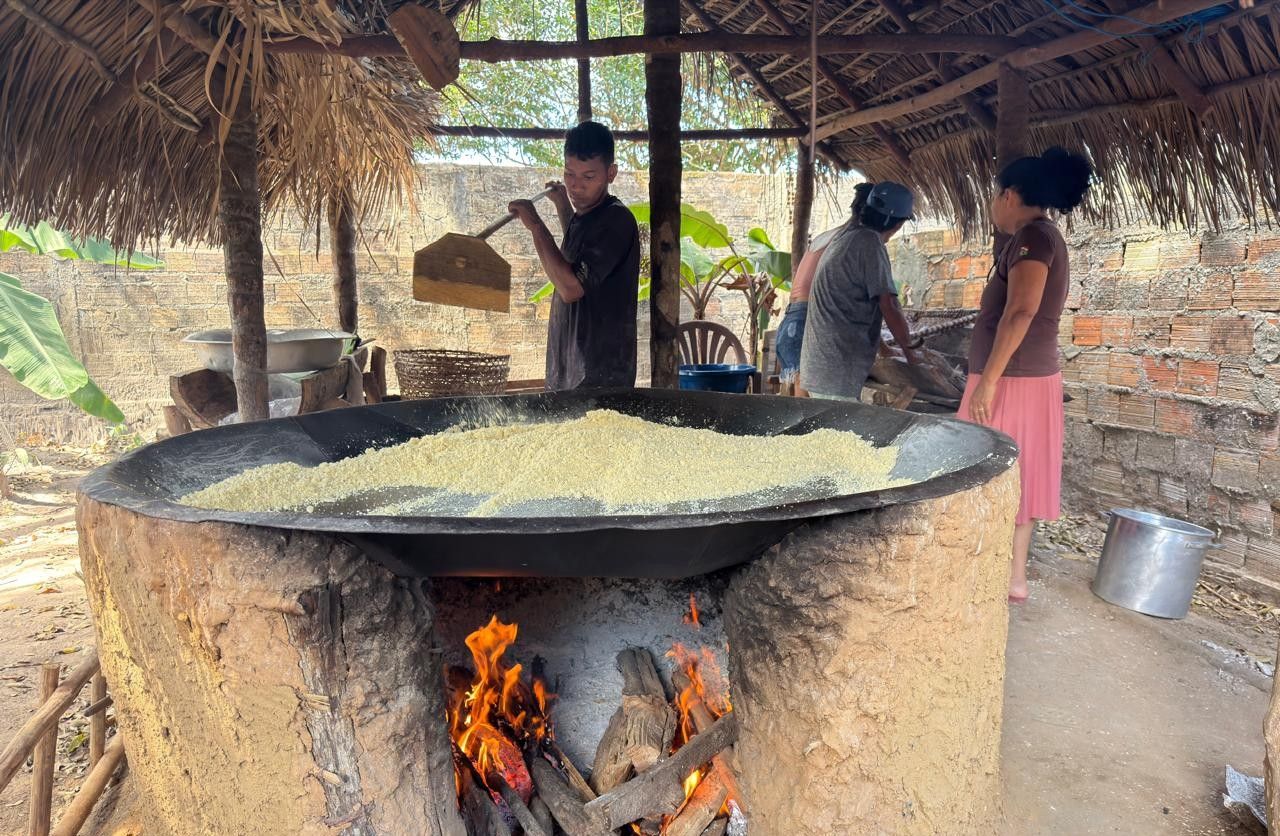
Finally, one reaches the Oven House [Casa do Forno], which, for Picanço, is the "apple of the eye" of the Backyard. "It is the 'maternity ward' of cassava products, where these fruits are 'born,' where the alchemy happens. It is there where one learns to make this food repertoire derived from cassava, but also where logics of belonging to the Amazon are forged," says the researcher.
Space of experiences
The Oven House, also known as the flour house [casa de farinha], is where the cassava is processed until it becomes flour. During the visits, participants can taste this production, as well as see and smell the production process, and even learn to get their hands dirty.
In addition to cassava derivatives, the "virada de camarão" [stirred shrimp] is also served, an emblematic dish of Urumajó. "Traditionally, the fisherman arrives from the tide with the shrimp and goes to cook it in the backyard. The neighbors start showing up, and everyone joins in to taste it. There is the moment of the 'turn' in the pot, when the shrimp at the bottom, already cooked, comes to the top, and the ones on top go to the bottom. Those on top are placed in the circle, with flour and pepper, and everyone eats, in cycles. This experience is offered to visitors of the Backyard," Picanço says.
Beyond the gastronomic part, the visit includes conversation circles and workshops on craftsmanship and traditional knowledge. "There is a conversation circle, for example, about the relationship between the moon and the tide, led by my father, 'Seu' Miguel, who is a fisherman. We had a visit from the Fishing Engineering course from the Bragança campus of the Federal University of Pará [UFPA], and it was my father who was lecturing to them, speaking about this traditional knowledge that the academia sometimes does not recognize," the anthropologist reports.
Leadership and income generation
Picanço highlights the leading role of the community and their knowledge in this process. Antônio Silva, a farmer, is the one in charge of the Oven House. He, who is a cassava producer, prepares, along with his family, all the derivatives of the root that are served at the location.
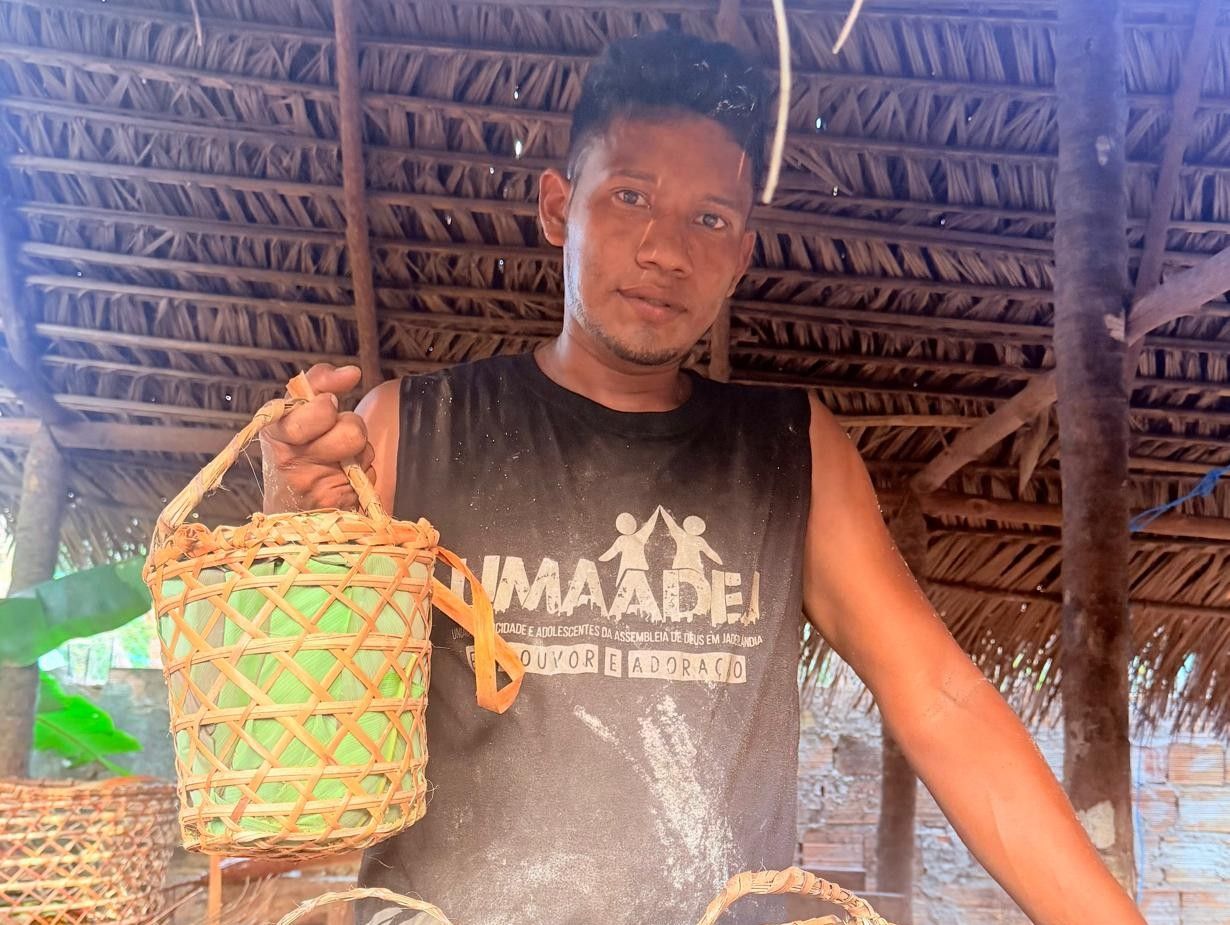
"We are Miguel's partners, we helped in the construction of the Backyard, we plant the cassava, and we make the flour, the beijus. The idea of the Backyard is very beautiful and important for us from Urumajó because it brings many things that are from here in the countryside and that were disappearing.
The project brings the mud house, the thatch bathroom, all of this has to do with us and our culture. It's beautiful to see students coming to visit, asking questions, getting their hands dirty in the oven house. No one had ever done this before, showing what we from the countryside do, eat, how we live," Silva celebrates.
The farmer also recalls that, besides cultural valorization, the initiative allows for income generation. "It generates a little money for us with the sale of the flours and beijus. It has been helping the families working on the project," he emphasizes. Picanço explains that the food is produced to be offered to visitors and that the surplus is sold in Belém. "The amount is divided among the community members who are in the project, and the rest goes toward the maintenance of the cultural hotspot," the anthropologist clarifies.
Students visit "living laboratory"
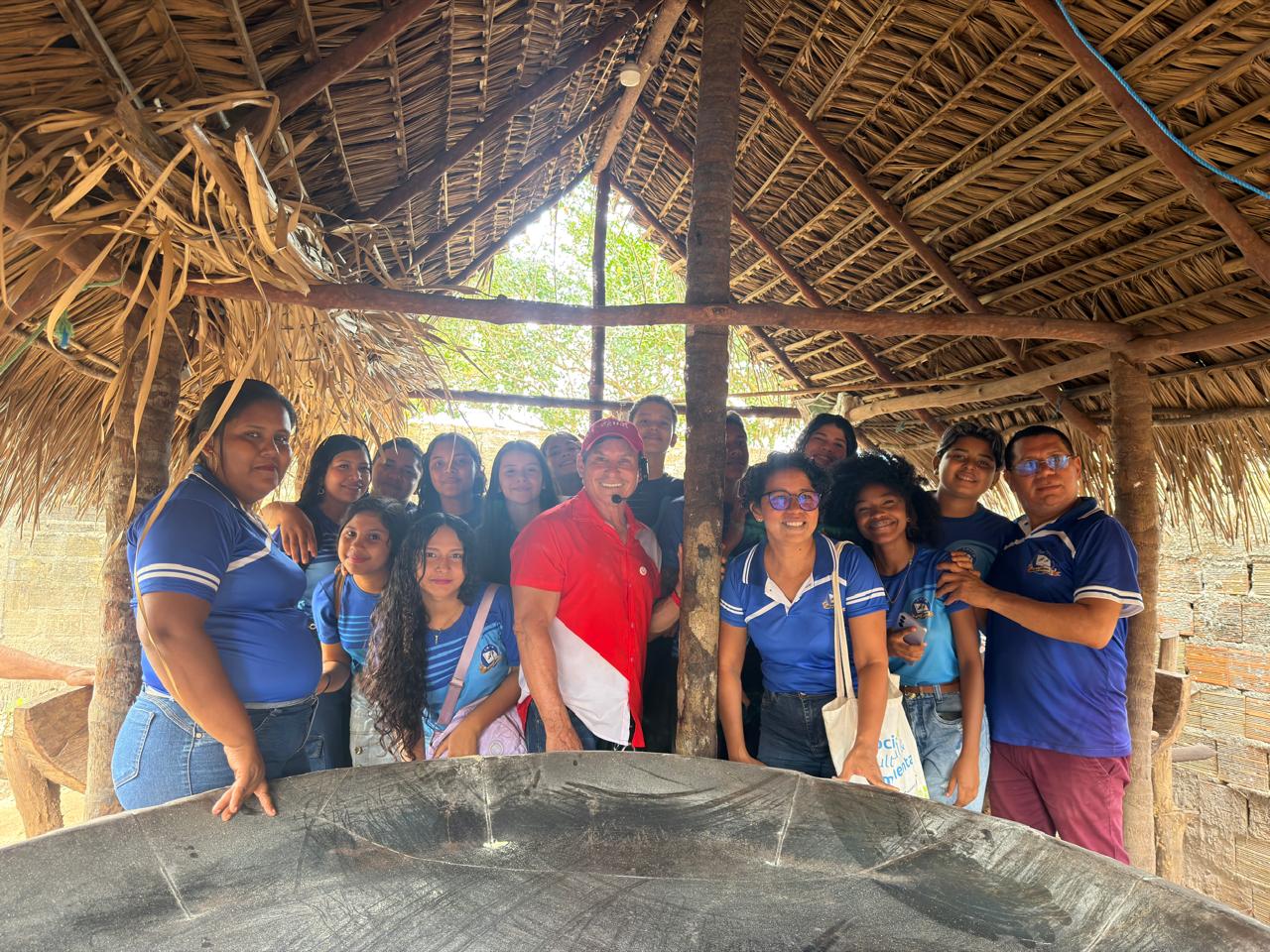
Aurizete Silva, a Visual Arts teacher at the André Alves municipal school, in Vila de Nova Olinda, in Augusto Corrêa, took her ninth-grade students to visit the Ancestral Backyard. For her, the experience was a living laboratory. "The students were able to hear stories, learn about ancient practices, and recognize the importance of preserving the memory and identity of the peoples who formed our culture. I notice that the younger ones, even though they live in the community, are gradually distancing themselves from this knowledge, from these life experiences. The Ancestral Backyard is something that brings the new generation closer to these customs and traditions," she says.
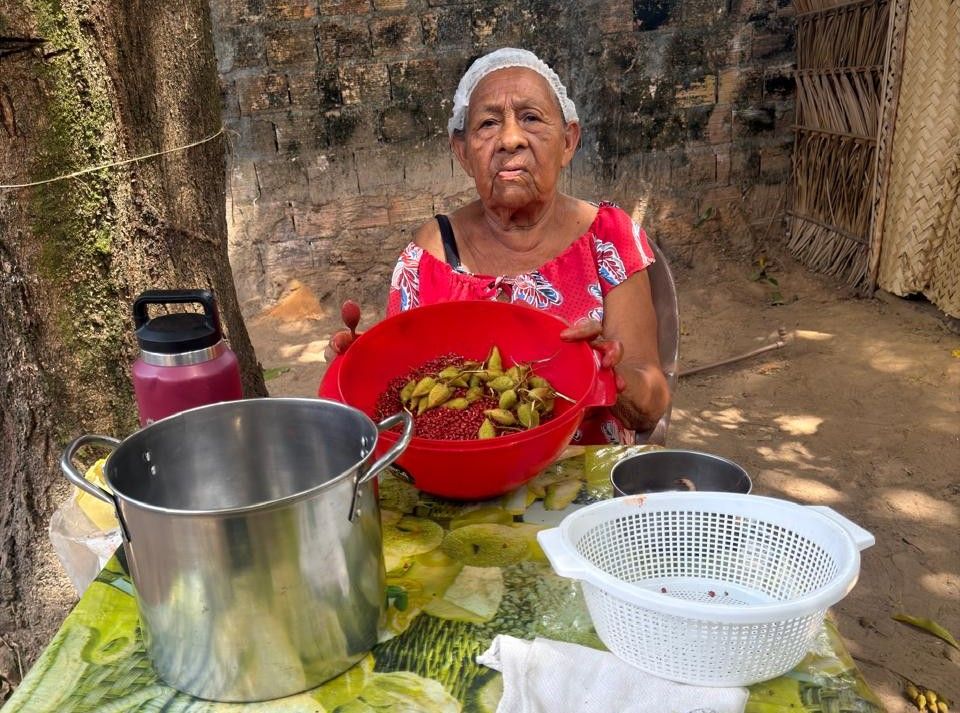
Geovana Ribeiro, 14, a student at the Rosa Maria Sousa Pereira school in Araí, also visited the space with her class and teachers. "I was able to learn a little about what life was like in the past, the life of our grandparents. Many things are different from how we live today. I realized how life has changed and how important it is to preserve these stories. Professor Miguel said a phrase that really stuck with me: 'It's always good to remember where we came from,'" the student highlights.
Scientific and traditional knowledge
Professor Cleide Marques was responsible for taking the Fishing Engineering class from UFPA to the Ancestral Backyard. "I wanted to bring the future fishing engineers closer to the community's reality. We sought to understand the relationships between fishing, food, conservation, and ways of life. We understand that working with fishing requires knowing and dialoguing with the people who live from it," the professor emphasizes. For her, scientific and traditional knowledge are built through different paths, but they can complement each other and converge.
Eduarda Sales, 21, a native of Bragança, was one of the Fishing Engineering students who visited the Ancestral Backyard. Beyond the traditional knowledge related to fishing, her experience was marked by memories. "I saw several activities that my grandparents did, my uncles did, and all of this creates an emotional memory. Other students also commented the same, speaking fondly of the traditions they remembered. The Ancestral Backyard gives visibility to people, historical relics, and memories with great emotional value, but which are sometimes cultures and labors that end up becoming invisible. The initiative shows that it is possible to build an education that values these communities."
Service Information:
What: Ancestral Backyard Cultural Hotspot: Cultivating Araian Flavors and Knowledge
Where: Community of Araí — Urumajó (Augusto Corrêa-PA)
Admission: Free, by prior appointment, with monthly visits
Contact and information: Instagram @quintal_ancestral
Next confirmed dates for visitation: November 19 and 20
INSTITUTIONAL PARTNERSHIP
The production of Liberal Amazon is one of the initiatives of the Technical Cooperation Agreement between the Liberal Group and the Federal University of Pará. The articles involving research from UFPA are revised by professionals from the academy. The translation of the content is also provided by the agreement, through the research project ET-Multi: Translation Studies: multifaces and multisemiotics.