For a long time, producing scientific knowledge about the Amazon meant consuming content from other parts of Brazil and the world. From researches to solutions to the problems faced in the region, the general interest in debating, analyzing, studying and presenting issues related to the reality experienced by the almost 30 million inhabitants of the biome has not always deserved active listening nor has attention been given to those who make up this scenario – survive in it and reflect upon it.
The lack of visibility of local knowledge, opinions and propositions (about what impacts this territory), which value those who belong to the Amazonian context, is one of the main challenges highlighted by researchers and the traditional population of the region.
However, for 50 years, a good part of this pondering and awareness about the Amazon has been reflected in the daily work carried out at the Núcleo de Altos Estudos Amazônicos (NAEA)[Center for Higher Amazon Studies], linked to the Federal University of Pará (UFPA). This local qualification for public, political and economic management, translated into numbers – 303 PhDs and 499 Masters who have already graduated from NAEA/UFPA programs – is part of the institution's legacy, which also maintains activities in international, national and regional projects.
The protagonism of scientists from the region in dealing with local issues becomes increasingly fundamental and urgent, given the context that the Amazon biome has faced in recent decades, and given its growing importance for the international scene – a period when challenges and global environmental, climatic and economic issues emerge.
Distinguishing feature
The expertise on the local reality by those who live in the Amazon and their ability to seek for adequate solutions based on deeper observation is seen as one of the distinguishing features of the scientists qualified by the institution. The director of NAEA/UFPA, Armin Mathis, understands that Amazonian researchers are not the only ones studying the region. However, the living condition of inhabitants of the biome goes a step further. “This means that we, firstly, have a very strong connection with teaching, all theses reflect the production of new knowledge in the region and about the region. But it is also about training people here. This is one of the biggest differences”, he ponders.
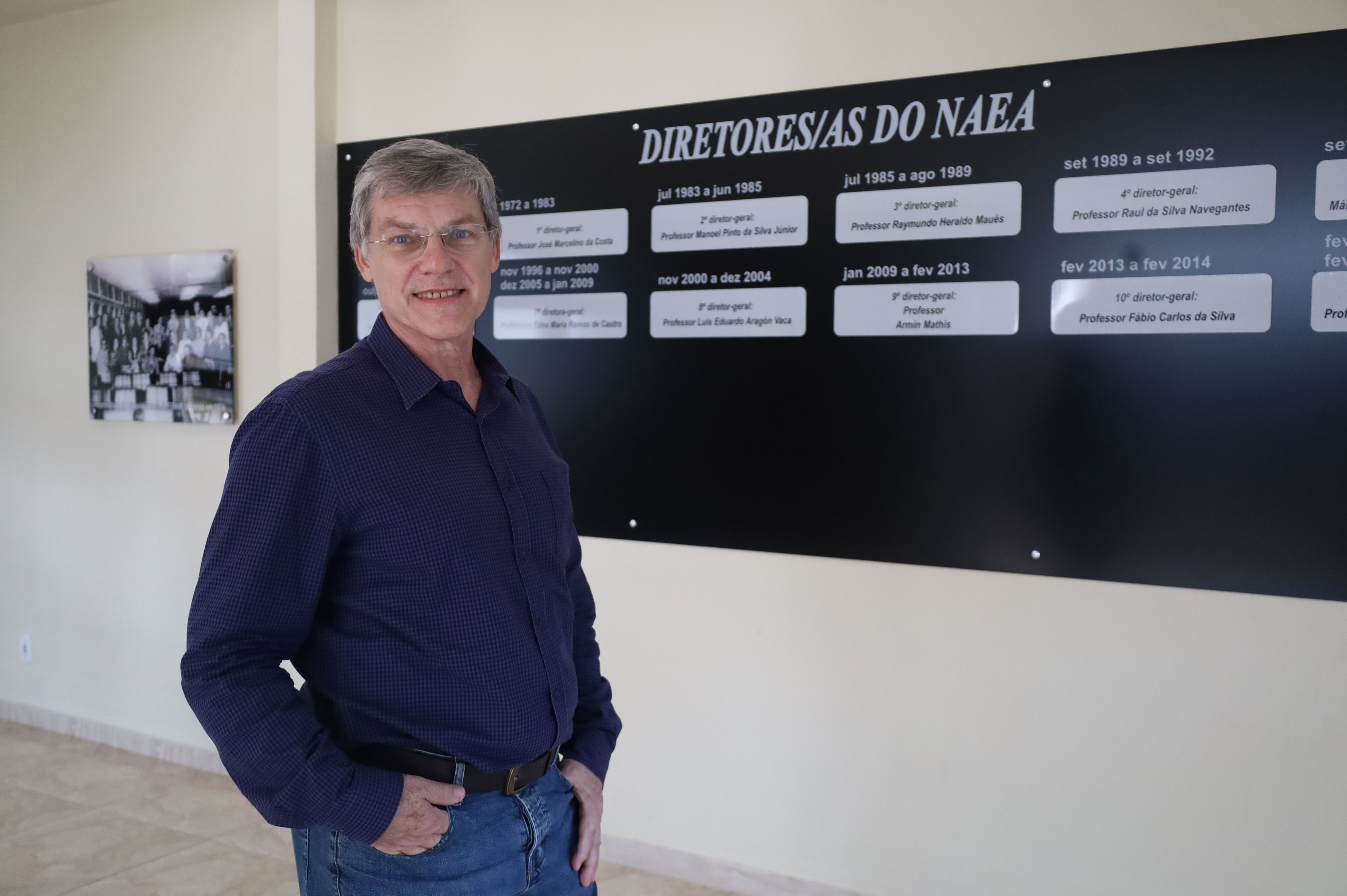
Within the analyzes already carried out by NAEA/UFPA, the pioneering spirit that the institution's professors have achieved over the years is also highlighted as one of the legacies that constitute the history of protagonism. In the Amazon, recalls Armin, two women researchers from the Center were responsible for initiating debates regarding the quilombola population and other traditional communities. “The research by professors Edna (Edna Maria Ramos de Castro) and Rosa (Rosa Elizabeth Acevedo Marin) were the first to focus on the quilombolas and discuss the issue of the remnants”, he highlights.
Costs
NAEA/UFPA calculates that keeping a researcher in the field in the Amazon region costs between R$1,000 and R$1,200 per day. This amount includes travel, food and accommodation expenses. “Producing science in the Amazon is an expensive investment, because of the long distances. The price includes travel and daily costs. Why? Flight fares from Belém are expensive, apart from traveling by boat. We have a certain limitation regardingresources”, points out Armin.
For this reason, he defends that the financial contribution aimed at supporting research in the Amazon should be greater than that dedicated to other locations, due to the specificities of the region. “We have long distances here, which one needs to travel by plane, charter a boat, there's no other way... So, that means we need resources. Research in the Amazon is not cheap. So, I cannot compare a project to be carried out in the Amazon with one that is carried out in the South”, he compares.
Bragança qualifies another interiorization class
NAEA/UFPA postgraduate programs (Master and PhD’s degrees) achieved the highest score according to Coordenação de Aperfeiçoamento de Pessoal de Nível Superior (Capes) [Coordination for the Improvement of Higher Education Personnel] evaluation. The continuation of this process often requires innovation. With that in mind, NAEA/UFPA started to develop projects allowing greater space to the population of the municipalities of Pará – the so-called “Interiorization”. Thales Canete, coordinator of NAEA/UFPA’s Desenvolvimento Sustentável no Trópico Úmido program, explains that the idea is to form critical sense in all agents that make up the Amazon. Initially, the municipality of Bragança, in the northeast of Pará, was the first to host NAEA’scourse.
“We are teaching the second class in Bragança. We publish the call, our professors teach classes, advisestudents and we qualify these people. The idea is to plant the ‘seed’ of NAEA, of ecological criticism and interdisciplinarity. We also have, in this process of interiorization, a special call, which means that we open a special call for traditional peoples and communities.
The idea is that when the course ends, we leave these people with critical sense and the ability to inaugurate and start their own projects in Bragança. And so that people who are from traditional communities can also have NAEA as a channel to access these international research spaces”, he states.
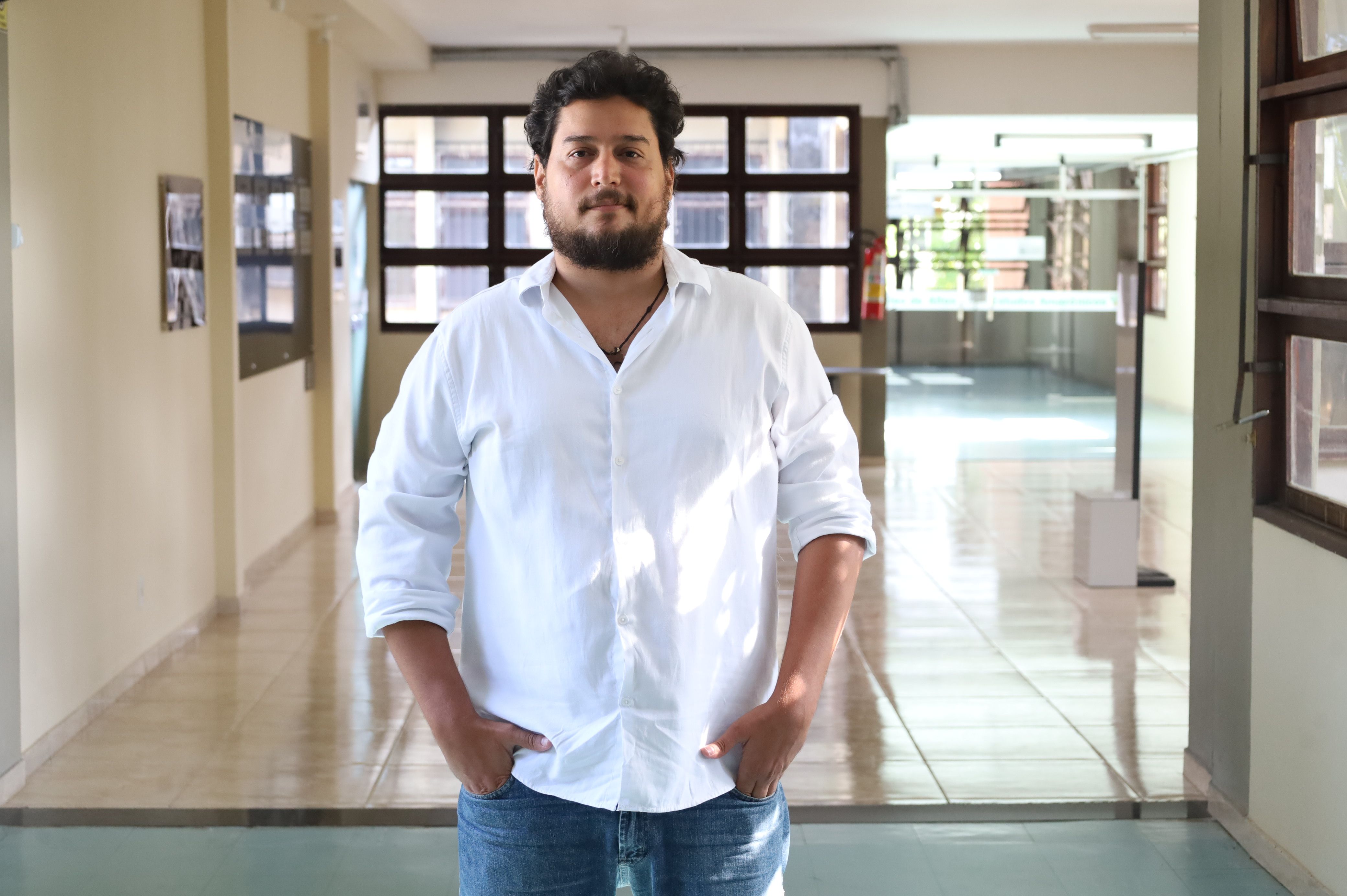
“Interiorization” contributes as a way of shedding light on people who live in the Amazon, aiming at both sustainable and economic development, respecting ecological limits and social justice. Thales also reinforces that the expanded education is not static, but dynamic and it directs attention to the patterns found in the region. “The idea is that NAEA not only arrives and teaches, but learns as well. NAEA is a channel for these people to access other places and for these people to teach who the Amazon belongs to. For a long time, the most common scenario was foreign researchers coming in, researching and returning. Now, we want to reverse this route”, he highlights.
Environmental education and sustainable development
The focus of the work that NAEA/UFPA has put into practice is environmental education as a manner todesign public policies for sustainable development. Professor Marilena Loureiro, also from the program Desenvolvimento Sustentável no Trópico Úmido[Sustainable Development in the Humid Tropics], works on this mission. “We already have several studies whose results demonstrate a theoretical field in clear consolidation, which now enables us to say that it is no longer possible, or at least appropriate, to talk about educational policy and practice in the Amazon without this education being referenced in analysis of major Amazonian socio-environmental issues. This implies research and knowledge of reality”, emphasizes Marilena.
“Without this assumption, the education of our children and youngsters will be destined to reproduce existing realities and maintain the culture of subalternity imposed on the region by the hegemony of development policy based on the denial of the voices and knowledge of traditional Amazonian populations. The Amazon needs to think about itself and from itself and this does not imply adherence to localist discourse. It simply implies the perception that it is necessary to start with serious analyzes of our major and emblematic socio-environmental issues. This is done with quality science in dialogue with reality. And we have been doing this right here in the Amazon for 50 years and in the form of various national and international cooperations”, adds Marilena.
Open doors to the world
Another important fact in the 50-year history of NAEA/UFPA is the partnership signed with other international institutions. The objective is to guarantee regional development by receiving and sending researchers to other countries. German Oliver Dinius is a professor of History and he is specialist in studies involving Brazil. He has been in Belém for less than a month – granted with an American scholarship. He is looking for greater experience with local traditions so that he can write a book about the Amazon – a subject that interested him more than 20 years ago while taking up a course in Harvard, in the United States – and pass on the knowledge he has acquired.
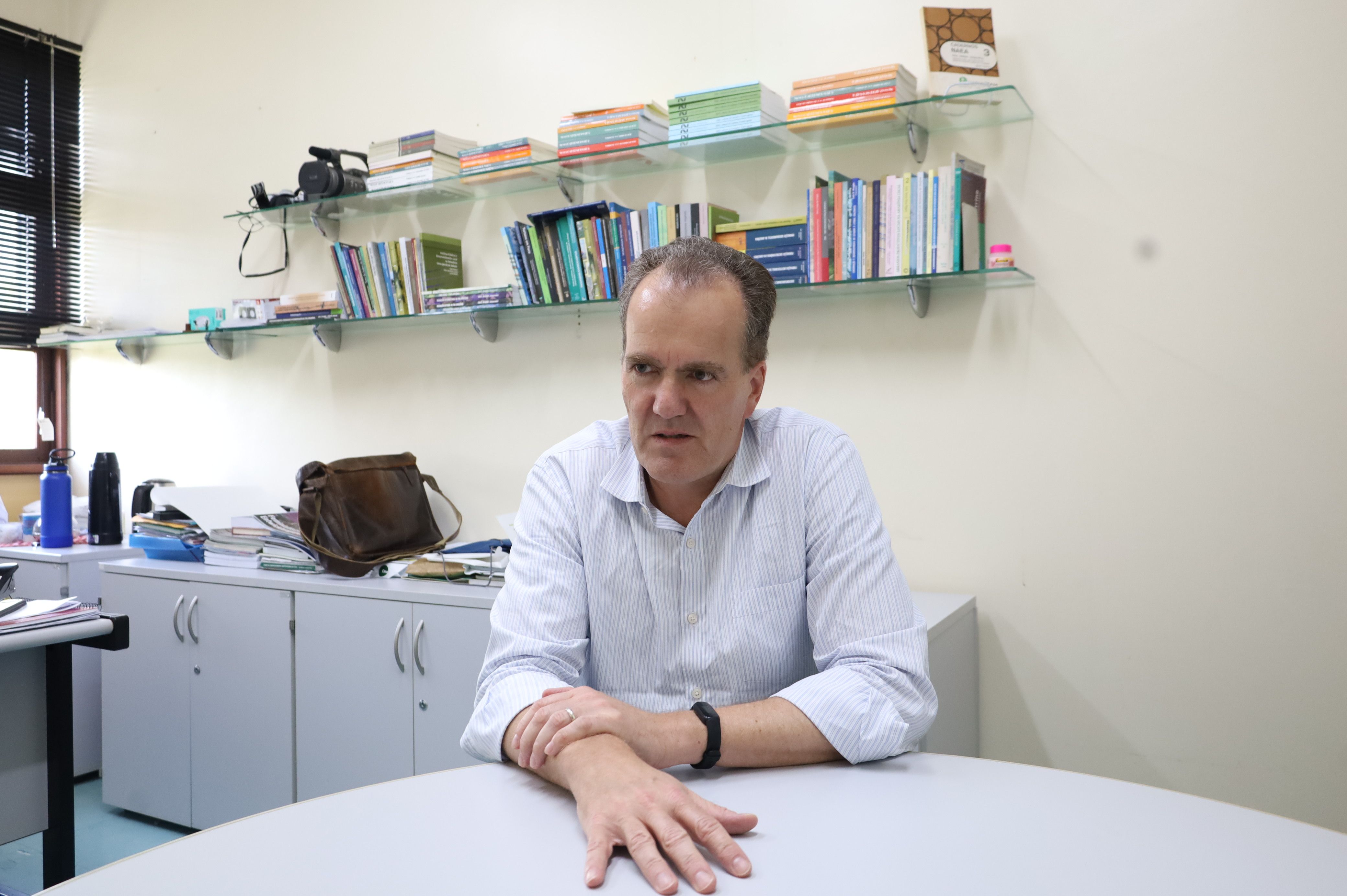
“I wanted to understand a little better what is really happening and what the perspectives of the population in the region are. So, I'm very interested in talking to scholars, professors, people from the region, in order to understand better and be able to explain it to my friends, but also to people of the same age, what is going on, and not only concerningthe distance, but also about the population, the reality...”, mentions Oliver. Economic, geographic and climatic patterns, which were previously unprecise to the researcher, will now be analyzed in more depth. “The aim is to write a book. I have started writing a more historical segment, I need to learn from practice”, he adds.
Legacy
Doctorate student at NAEA/UFPA, Karen Santos researches in the line of “Society, Urbanization and Population Studies”. According to her, the biggest motivation for joining the doctorate was the professional experience in contact with women in the prison system of Pará. For the future, Karen saysthat she wants to work as a teacher with a regionalist and territorial perspective, focusing on the Amazon and for the Amazon. “NAEA is material and immaterial historical heritage in the construction of knowledge in the Amazon. Therefore, keeping it active and promoting it is a historical, cultural, academic, political and economic duty towards the local communities that have been the focus of studies by researchers over these five decades”, declares Karen.