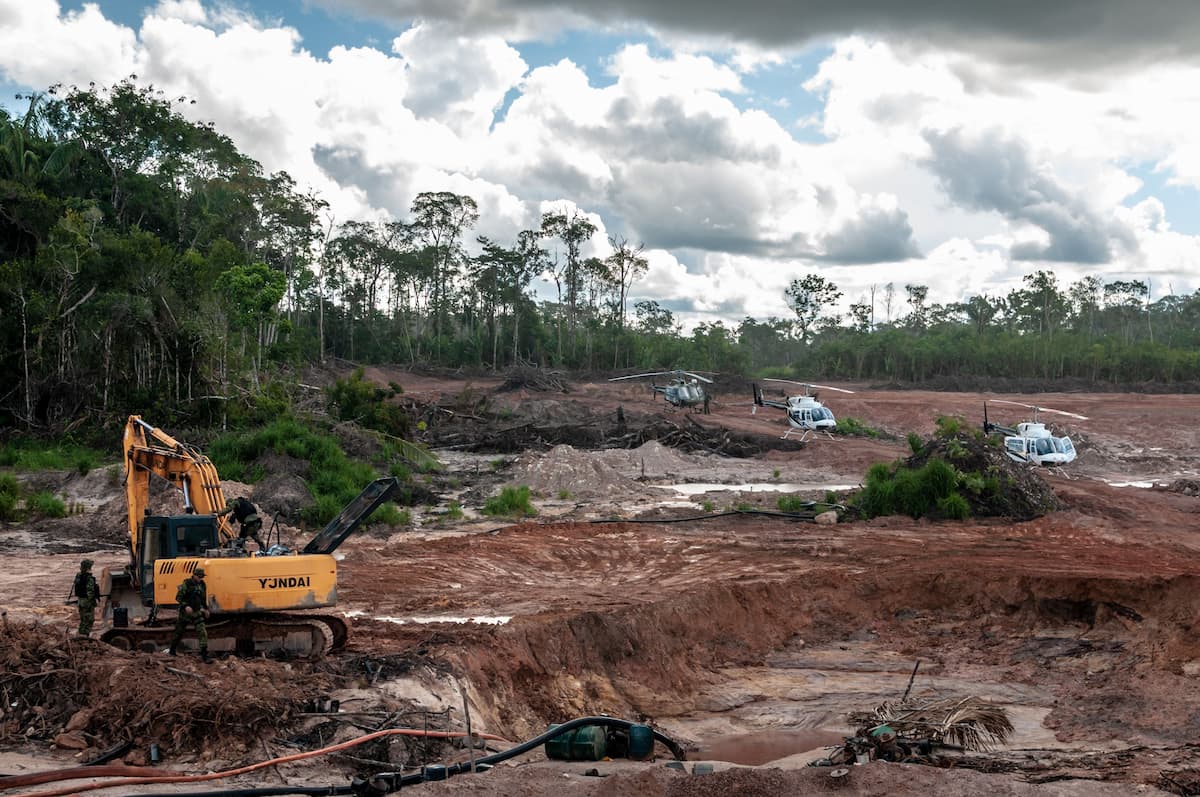
According to research conducted by the Oswaldo Cruz Foundation (Fiocruz), in partnership with the Mamirauá Institute for Sustainable Development, the Amazon basin, the largest hydrographic basin in the world, is the second most polluted by plastics on the planet. Daily, tons of trash, and not just plastic, are dumped into the igarapé streams and rivers in the region, by boats, urban population, or even by riverside people, who usually lack waste collection infrastructure.
Igarapé streams carry waste to rivers, which then transport it to the main river, the Amazon, and from there they flow to the sea, increasing ocean pollution, which is already dominated by plastics and microplastics, with more than 80 million tons accumulated.
Pollution of water bodies by solid waste harms fauna, flora, water, sediments, and human health. Microplastics, for example, are already found inside various aquatic beings, terrestrial animals, and even the human body, which can cause health problems that are not yet fully understood.
In order to contain the problem, environmental education is necessary to prevent irregular disposal of garbage by the population; adequate garbage collection; and a reduction in the use of non-biodegradable disposables, especially plastic. But an initiative, which was started in Paraná and is already spreading to Amazonian cities, can contribute to significantly reducing the presence of garbage in rivers and streams in the region.
ECO-BARRIERS
The simple, cheap and sustainable method was conceived by the Paraná environmentalist Diego Saldanha, who noticed the growing volume of garbage in the Arituba River, which runs behind his house in Colombo, in Grande Curitiba. He developed and deployed a structure in this river, made with floating containers, ropes, and a submerged net, that traps solid waste carried by the river current. After being stopped at that point, the waste is collected and given an appropriate destination, either to recycling cooperatives or to a sanitary landfill.
The technology, called an ecobarrier, was so successful that it spread throughout the country, including the Legal Amazon. There are already ecobarriers installed, for example, in Belém and Benevides, in the state of Pará; in Manaus, in the state of Amazonas; in São Luís and Imperatriz, in the state of Maranhão; in Porto Velho, in the state of Rondônia; in Boa Vista, in the state of Roraima; and in Cruzeiro do Sul, in the state of Acre. In some places, Diego helped to implement them. Others created their own solutions. The structures allow the collection of tons of solid waste that is improperly discarded.
BENFICA RIVER
The first city in Pará to receive an ecobarrier was Benevides, in the metropolitan region of Belém, in July 2025, with consulting by Diego Saldanha and support from Natura's Elos – Rios Vivos program, which operates in the Amazon promoting the removal of plastic waste from rivers, fostering recycling chains, and creating packaging made from plastic removed from the waters.
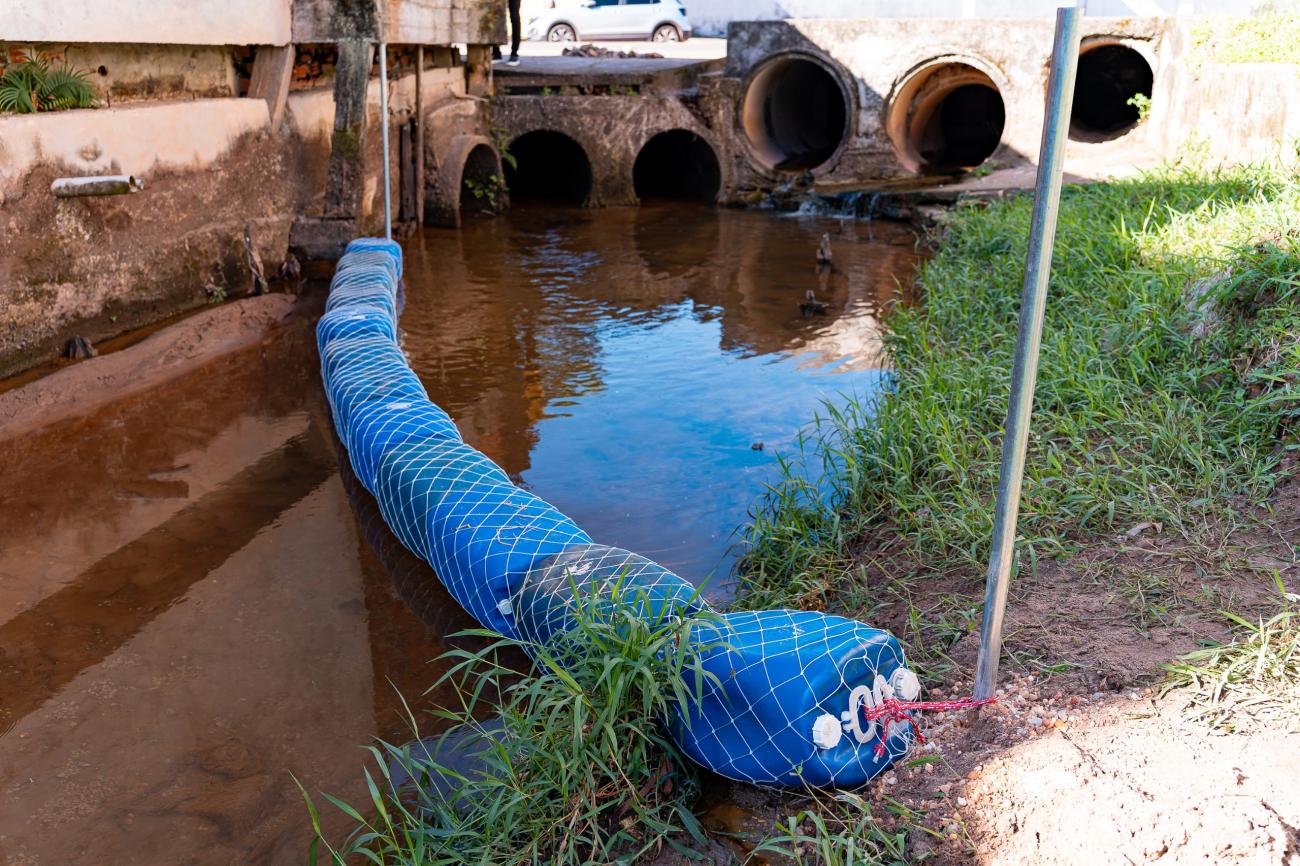
The structure was installed in one of the branches of the Benfica River, in the central area of the municipality, at a strategic point to contain irregularly discarded waste. The eco-barrier floats according to the water level and directs waste to the bank, to facilitate collection, without the need to enter the river. The material is collected by a team from the city hall, once a week, and destined for ReciclaBen, a cooperative of recyclable waste collectors in the municipality. There, the material undergoes sorting and processing, and what has commercial value for recycling is sold, favoring, in addition to environmental preservation, the circular economy and income generation within the city.
According to Welton Neves, the municipal secretary for Environmental Management and Tourism, the initiative has a vision for the future. “We seek to face the challenges of the climate crisis and promote the protection of the Amazon with real and permanent actions,” he emphasizes. The eco-barrier is part of a larger action, Recicla Benevides, which in less than two years has already collected more than 200 tons of recyclable waste, with the support of waste pickers and the population. The strategy involves selective collection, voluntary drop-off points, partnerships with schools and local businesses, and campaigns to exchange recyclables for social currencies, called Econben, which can be used to purchase school supplies, tools, and household items.
Belém's first eco-barrier is located in the Tamandaré Canal
A few days after the installation of the eco-barrier in the Benfica River, also in July 2025, it was the Tamandaré Canal’s turn. Located in the Cidade Velha neighborhood, it was the first to receive eco-barrier in the capital of Pará.
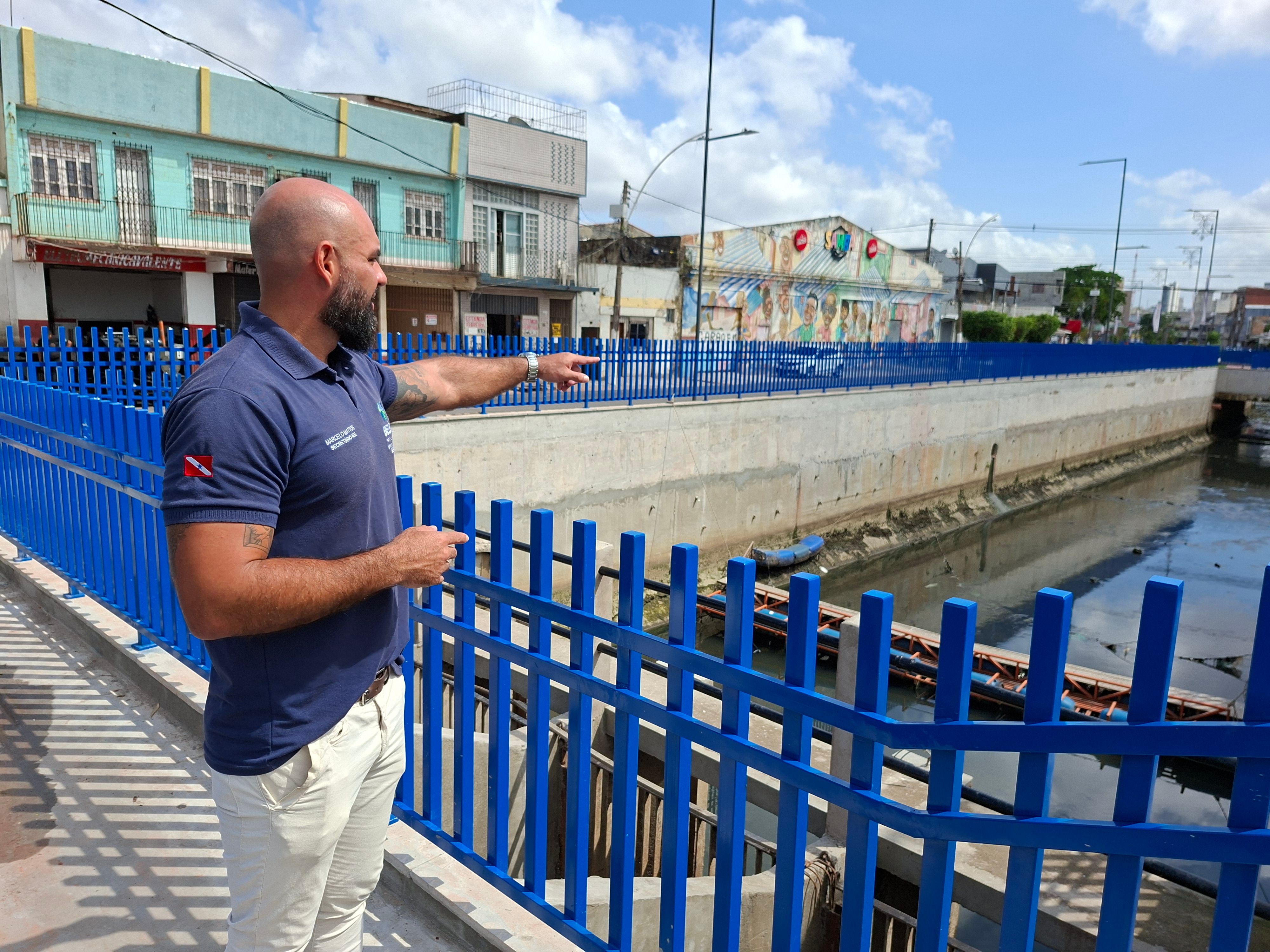
According to Marcelo Mattos, Deputy Secretary of Urban Maintenance and Conservation of Belém (Sezel), the installation of the eco-barrier was also carried out with the support of the company Natura and, since then, has already collected about 15 tons of recyclable waste, not counting those that cannot be recycled.
“The waste accumulated at the containment barrier is quite diverse, with a greater predominance of plastics. Approximately 10 cubic meters of waste are collected daily from the barriers and gates of the Tamandaré canal. Considering the weight per cubic meter, we have an approximate quantity of between 400 and 500 kilos per day,” informs the manager.
The waste retained at the ecobarrier is removed in the morning and at night by a cleaning team and placed in an appropriate container for storage. Then, it is transported daily by another team to the Cooperative of Recyclable Material Collectors (Concaves). “The cooperative members use this material as raw material for the manufacture of ecological bricks and urban furniture, such as flower boxes, trash cans, tactile paving, and manhole covers,” says Mattos.
“The installation of this and other eco-barriers, which will still be implemented, is extremely important to reduce the pollution that reaches our rivers. There are more than 190 kilometers of canals that cut through the city. The installation of this material prevents these residues, incorrectly discarded by the population, from reaching the rivers,” emphasizes Mattos.
Like Benevides, Belém also implements centers that allow citizens to exchange recyclable materials for payment via Pix, transforming waste into direct benefit and preventing it from reaching the environment.
Igarapé Streams in Boa Vista receive structures
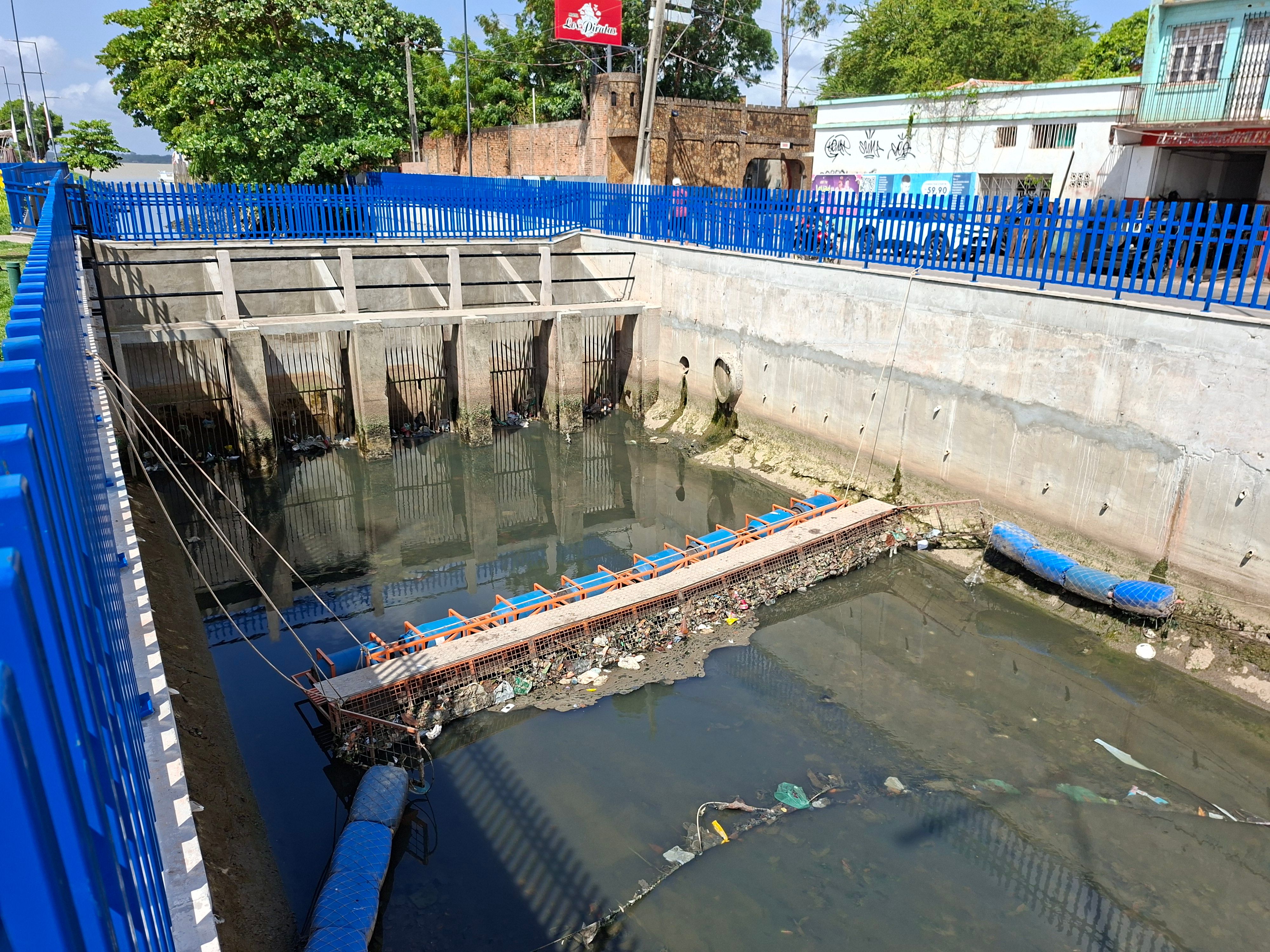
The municipality of Boa Vista, in Roraima, also adopted the eco-barrier technology. Three structures have already been installed: two in the Caxangá igarapé and one in the Mirandinha igarapé. According to Rômulo Almeida, the municipality's Superintendent of Public Conservation, the initiative arose from the need to reduce contamination of the Branco River.
“During the winter period, an average of 150 kilograms of waste are collected per week. The removal of the waste is carried out by a contracted company and, due to contamination, the material cannot be reused by recycling cooperatives: it is sent to the municipal landfill,” explains Almeida.
According to the manager, new locations for the implementation of eco-barriers in Boa Vista are already being studied, especially aiming to prepare for the next rainy season in the capital of Roraima.
“Eco-barriers are a sustainable and effective solution for reducing pollution in water bodies, contributing to the preservation of the environment and public health. In addition, they promote awareness of the importance of proper waste disposal and the impact of pollution on nature,” highlights Almeida.
Eco-barriers have been protecting Manaus for two years
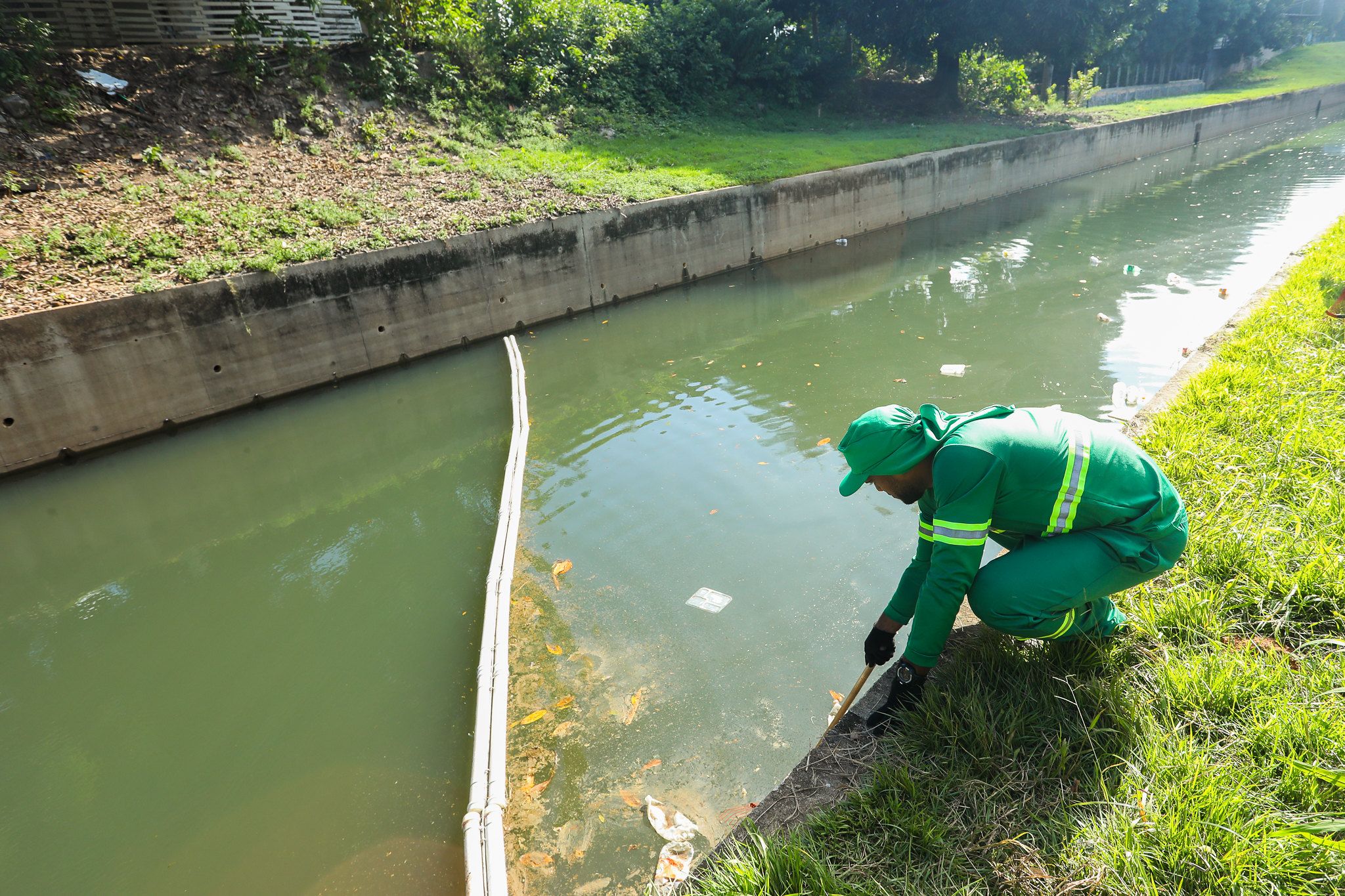
In Manaus, the use of eco-barriers has been around for longer: almost two years since implementation. The technology follows the same principle as the one created by Diego Saldanha, but has a different structure and materials. In the Amazonian capital, the equipment is made with 90% nautical aluminum and 10% galvanized iron, which are the screens. The structure forms a walkway, where the responsible team can walk and collect the materials.
The Manaus eco-barrier was created by Manuel Brito, known as “Mazinho da Carbrás” or “Mazinho da Eco-barreira”. “I am an environmental activist, I have been working in this area for 20 years. I have projects in the lagoons of Manaus and two years ago I took the initiative to implement the ecoibarriers, which were embraced by the city hall. I am developing this project together with the Public Cleaning Department of Manaus, with twelve eco-barriers installed at strategic points in the city, in various streams and different neighborhoods,” explains Mazinho.
The waste is collected daily by a city hall team, which goes through all the installations. The estimate is that, in two years, more than 900 tons of garbage have already been stopped by the ecobarriers, preventing them from going into sewers and the Negro River, which runs through the city.
“The eco-barrier holds the trash in the shallow part of the stream; it doesn't need dredging to clean it. Of the collected material, 60% is recyclable, which is destined for cooperatives, and 40% goes to the landfill. It's a cheap system for the size of the problem. It's a silent shield that doesn't consume fuel or energy. It only needs simple maintenance when a screen breaks. It's the cheapest system on the planet to prevent this trash from clogging drains and causing flooding, but also to prevent it from reaching the Negro River, the Solimões River, and the ocean,” emphasizes the activist. Mazinho's goal is for the installation of eco-barriers in urban streams to become law in states and municipalities.
EDUCATION
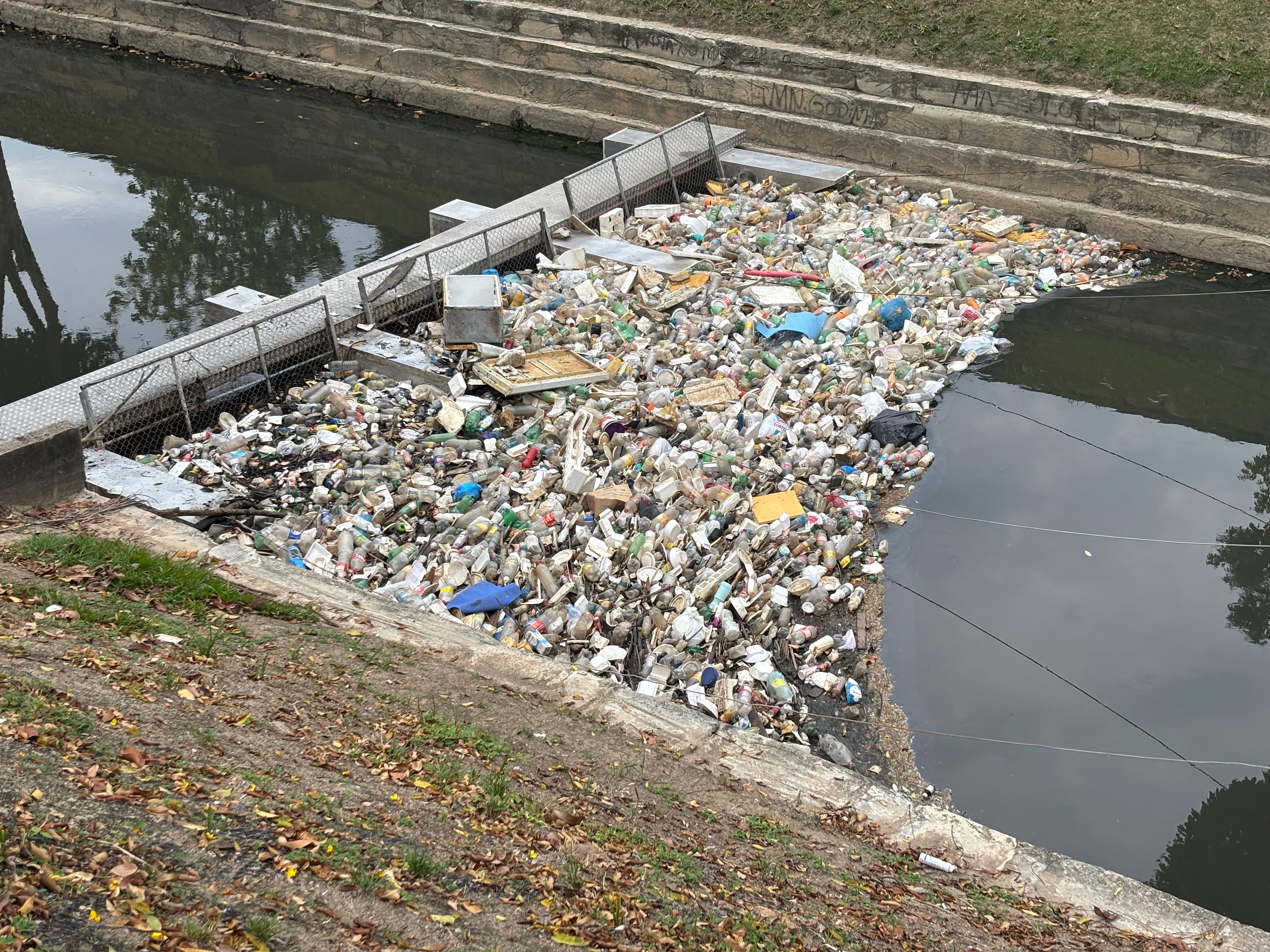
For Mazinho, the pollution of streams has two solutions. One is the implementation of eco-barriers. The other is raising public awareness. “First, people need to understand that they shouldn’t throw trash into the streams. But when that happens, the eco-barriers also help educate, because they reveal the absurdity of the amount of trash retained. The eco-barriers can hold up to 15 tons of trash. It’s a way for the population to see the extent of the damage when trash is disposed of incorrectly,” says the environmentalist.
INSTITUTIONAL PARTNERSHIP
The production of Liberal Amazon is one of the initiatives of the Technical Cooperation Agreement between the Liberal Group and the Federal University of Pará. The articles involving research from UFPA are revised by professionals from the academy. The translation of the content is also provided by the agreement, through the research project ET-Multi: Translation Studies: multifaces and multisemiotics.