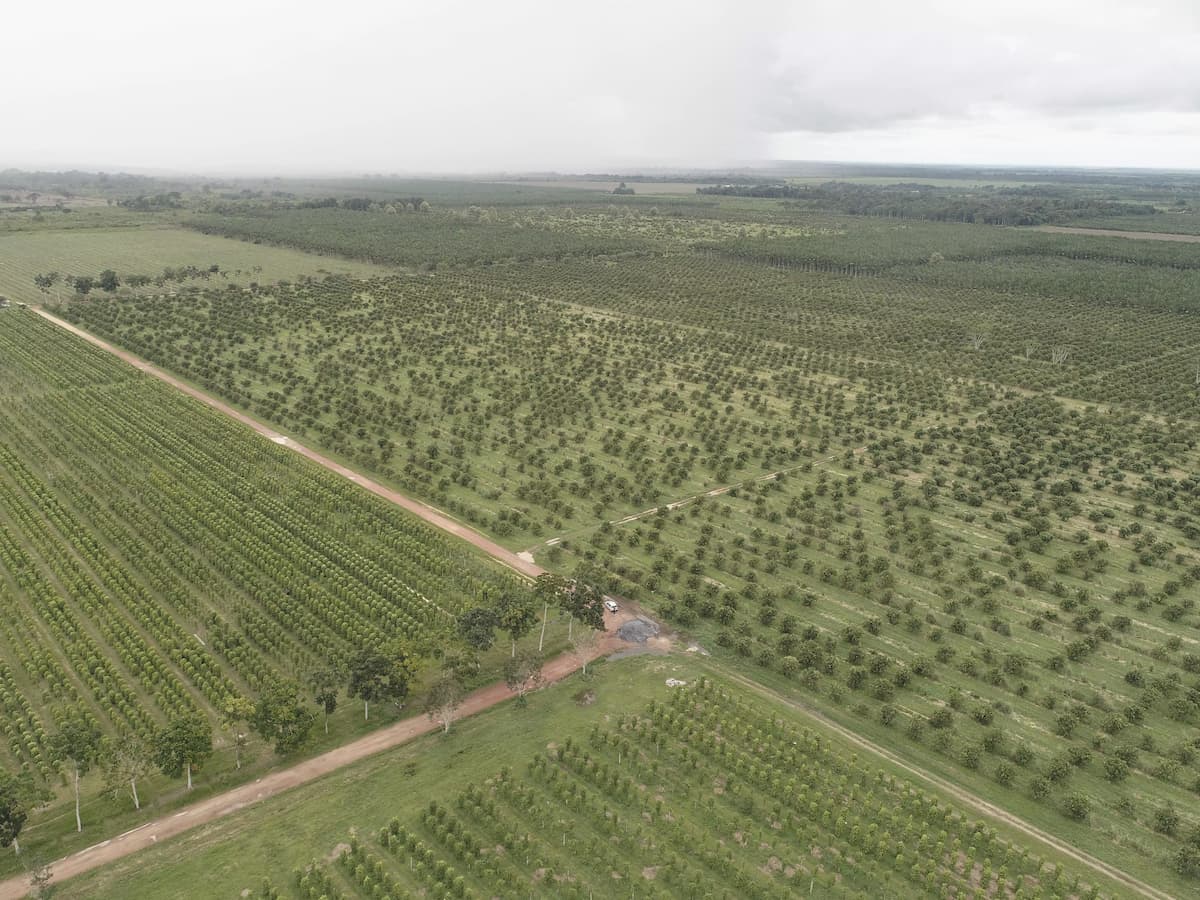
The implementation of the carbon credit market in the Amazon has become the target of recent debates and criticism. The system, which repays those who reduce the release of gases responsible for the greenhouse effect, allows compensation for companies and other actors that try to reduce their emissions footprints. This model has gained strength after the emergence of climate agreements, signed since the 1990s, to reduce CO2 emissions, and emerged as an alternative for countries which have a greater share in these taxes.
However, researchers have been pointing out signs that this mechanism presents major gaps and problems. In addition to the race for untouched areas of the Amazon forest, in search of maintaining financial power and foreign geopolitical control, the alternative is not producing apparent environmental results, scholars point out. And this movement, made up of million-dollar promises and contracts, also affects traditional populations in the region.

The business consultancy McKinsey & Company estimates that the gains from this type of market for Brazil are substantial. Considering the Amazon area, the country can generate up to R$26 billion per year in carbon credits, creating around 1.5 million jobs by 2030, he examines. In a national event that brought together state governors and national leaders from the Brazilian political scenario and economic sectors last Monday (Nov 6th), the governor of the State of Pará, Helder Barbalho, referred to the challenge of regulating the alternative carbon credit market, facing the environmental difficulties that Brazil and the world face. For him, there are opportunities.
"We need to make the forest the main vector of carbon capture, because this attitude puts Brazil in the spotlight and makes our Amazon forest, the largest tropical forest in the world, the greatest treasure in this new market, which will be fundamental to neutralizing the planet's emissions", he affirms.
However, the numbers pertaining to this horizon are not, in themselves, a guarantee of benefits to the environment: a study conducted by the British newspaper The Guardian, in partnership with other vehicles, shows that more than 90% of the securities of companies linked to the carbon credits market did not result in effective changes to reduce greenhouse gas emissions. This is reinforced by an analysis carried out this year by anthropologist Andrea Oliveira, from the Federal University of Paraná (UFPR). She states that reducing the complexity of the forest using carbon credits is “intangible”.
Other arguments add to these criticisms. According to geologist Norbert Fenzl, professor-researcher at the Núcleo de Meio Ambiente da Universidade Federal do Pará (Numa-UFPA) [Environment Center at the Federal University of Pará], the greatest interest in investing in projects to reduce carbon dioxide emissions in the Amazon comes from industrialized nations, such as the European countries and the United States, precisely because this is an attempt to continue the dynamic of resource exploitation, without taking responsibility for reducing their own activities that generate harm. Fenzl argues that the practice has been guided by these nations, which pay others to contain the release of CO2 into the atmosphere. For this reason, the author recalls carbon credits are currently being traded in the same way as shares on the world's stock exchanges.
“This means that industrialized countries have invented, or discovered, a way to allow their industries to continue emitting, let’s say, buying, CO2. This turns into a mechanism that transfers to less industrialized countries the possibility of earning ‘some change’ to, in essence, compromise, directly or indirectly, their own development”, ponders Norbert. “A ton of CO2 emitted is a credit. And this is approximately equivalent, in monetary terms, to US$ 273. And all other greenhouse gases are being compared in relation to a ton of CO2 emitted, having as their monetary value this relation to a ton of carbon dioxide”, details the researcher from UFPA.
Global hegemony
The researcher points out that guaranteeing low emissions in other territories is a concern of industrialized countries and it is related to the advent of new world powers – such as Russia, China, India, Brazil and South Africa (BRICS). It is also related to the difficulties encountered in finding a sustainable energy source to keep the system running. Until the current date, fossil fuel matrices are still predominantly responsible for 86% of CO2 production, according to data from the Global Carbon Project. These factors, says the researcher, are considered reasons for weakening nations with strong industrial power – which leads them to seek the 'solution' of the carbon credit market. "It's not by chance that the United States has 900 military bases around the world. This is not about spreading democracy," says Fenzl.

"In the end, it's all about who controls the energy sources of resources for development. So, if we don't transfer all these huge resources to the development of new technologies, alternative energies, energy sources that are less polluting and problematic than oil and natural gas, we won't get out of this vicious circle," argues the professor.
"This is simply because the developed countries, which are already industrialized and need this energy, tell the other nations that they can no longer use it [i.e. emitting CO2] because the 'climate apocalypse' is coming. It's very difficult to convince unemployed and hungry Africans, Asians or Latin Americans and tell them that they have to wait a while, because they have to care about climate change," says Fenzl.
Problems in the Amazon are more complex, says researcher
The idea that the carbon credit market is capable of attracting benefits to the Amazon context is not approved by the professor from NUMA-UFPA. Norbert Fenzl points out that local community development requires actions that go beyond this model – and involve significant changes to the economy and political structure.
"In the Amazon, this argument that carbon credits can stop or reduce the destruction of the forest is extremely invalid for me. What Amazonian communities and societies need to develop is much more complex and there are many other factors that need to be considered. It's not simply a matter of stopping deforestation or paralyzing and slowing down the process of occupying the Amazon," he says.
Solutions
In view of the problems faced in the Amazon, reducing pollution in rivers and preserving natural resources in economic and industrial activities are some of the solutions mentioned by Norbert for maintaining the biome. For him, however, the claim that reducing CO2 emissions contributes to this process needs to be based on studies that prove its effectiveness in relation to climate change and global warming. "And this is an issue that is not being completely resolved. In the scientific world, it still hasn't been resolved. It's a very reductionist solution for an extremely complex system. We must try to reduce river pollution as much as possible. We've already found microplastics here, in the Lower Amazonas, in fish," says the researcher.
Carbon credit market companies harass traditional communities in Pará
The poor applicability of the carbon credit market to preserve the Amazon region, as described by Norbert Fenzl (UFPA researcher), is not the only obstacle to adapt this model to the region. In July, the Ministério Público Federal (MPF) [Federal Public Ministry] and the Ministério Público do Estado do Pará (MPPA) [Public Ministry of Pará State] released a technical note detailing reports on the harassment by companies in the segment, mostly foreign ones, approaching traditional communities. The document concluded that the dynamics developed in the territories evidence disrespect to fundamental rights of the peoples, with regard to access to information on the issue, as well as illegal appropriation of public lands and alterations to the way of life of these populations.
The MPF's analysis was based on several studies by entities linked to the protection of these communities and the environment. A publication entitled “Neocolonialismo na Amazônia: Projetos REDD em Portel, Brasil” [Neocolonialism in the Amazon: REDD Projects in Portel, Brazil], by the Movimento Mundial pelas Florestas Tropicais (WRN) [World Movement for Tropical Forests], identified the existence of carbon credit projects that reach an “extensive area of 714,085 hectares, occupying 28% of all the municipality of Portel, equivalent to almost 20% of the territory of Switzerland”. According to the text, the objectives of the proponents, mostly foreigners, are to “profit through the sale of carbon credits” to polluting companies in the USA and Europe. “The credits justify the continuation of burning oil by such companies instead of seeking alternatives”, points out the report.

Last August, during the Diálogos Amazônicos [Amazon Dialogues] program, an event held in Belém and aimed at listening to the demands of society in the region, the MPF opened up a space to actively understand the reality that communities face with the arrival of the carbon market. The results of the points raised will be used to guide public authorities.
Attorney of the Republic and chief prosecutor of the MPF in Pará, Felipe de Moura Palha, recalls that this material is still under elaboration, but mentioned, in advance, that the recommendations aiming to guarantee local dynamics involve the maintenance of rights. "We have agreed to draw up a document with guidelines for action by all members of the MPF in Brazil, issued by the 6ª Câmara de Coordenação e Revisão do MPF [MPF's 6th Chamber of Coordination and Review]", he said.
Indigenous people face harassment
The situation worries the indigenous population of Pará. Ronaldo Amanayé, treasury coordinator of the Federação dos Povos Indígenas do Pará (Fepipa) [Federation of Indigenous Peoples of Pará], points out that one of the most critical points in the scenario is the lack of technical and legal knowledge passed on to the communities receiving the carbon credit proposals.
"Some of the companies that are signing contracts with the indigenous people are the same ones that are working out the legal details involving these populations. So, this already indicates a major flaw. The person accepts what is in the company's interest. We realize this has already become quite common. Companies are contacting leaders in order to harass them. Several companies go to the same indigenous person. They talk about millions, about 20 to 30-year long projects," he denounces.

UN backs carbon credit market
Projects involving the reduction of carbon emissions are called Reducing Emissions from Deforestation and Forest Degradation (REDD). The concept, adopted by the United Nations (UN) Climate Convention, refers to a mechanism that allows remuneration for those who maintain forests preserved from deforestation – a practice that reduces the release of greenhouse gases into the atmosphere.
Conservation and sustainable management activities were then also included, giving rise to REDD+. A CO2 credit is then generated for each ton that is no longer emitted. To make it possible, companies must take steps to replace the activities that generate the release of the component, such as changing energy sources.
The first meeting that launched discussions on the need to progressively and continuously reduce greenhouse gas emissions was the 1992 United Nations Framework Convention on Climate Change (UNFCCC), initially signed by 165 countries, including Brazil.
Since then, the United Nations (UN) Conference of the Parties has brought about a series of agreements, such as the Kyoto Protocol (1997) and the Paris Agreement (2015), all designed to set targets for reducing emissions that threaten the global climate.
Regulations
At the beginning of October 2023, Brazil took a step towards making the carbon credit market regulated. Until then, this activity was done on a voluntary basis, with no exact guidelines on what was allowed or not. The Comissão de Meio Ambiente do Senado Federal [Federal Senate's Environment Committee] approved the bill that regulates the initiative and creates the Sistema Brasileiro do Comércio de Emissões (SBCE) [Brazilian Emissions Trading System], benefiting companies that manage to reduce CO2 emissions per year.
The text was approved on a terminative basis – which means it doesn't need to be voted on in plenary unless there is an appeal by the senators. As a result, if there are no objections, the bill will go directly to the House of Representatives.
Recommendations made by the MPF to protect traditional communities in Pará:
- The Rights of Free, Prior and Informed Consultation of Traditional Peoples and Communities must be safeguarded;
- Carbon credit contracts must have the necessary state intervention and be exempt from acts of land grabbing;
- Companies that certify or benefit from carbon credits should set up audits to prove that they guarantee the human rights of local populations - and external ombudsmen should be set up to deal with complaints;
- The sharing of benefits must be based on respect for traditional peoples and communities and their autonomy.