We know that human beings and even animals have rights established by law, depending on where they live. But have you ever heard that a river can be a subject of rights, having not only its existence guaranteed, but also that of the intricate ecosystem network that comprises it?
This is already a reality in some parts of the world. In 2017, for example, the New Zealand Parliament granted the Whanganui River the same rights as a person, making it the first river in the world to be recognized as a living entity. In the same year, the High Court of Uttarakhand , in India, recognized the Ganges and Yamuna rivers as living beings.
In Brazil, a 2023 municipal law from the municipality of Guajará-Mirim, in Rondônia, authored by the indigenous councilman Francisco Oro Waram, recognized the Laje River (Komi Memen) as a “living entity and subject of rights,” guaranteeing its natural flow, its capacity to nourish and be nourished by the forest, and protection against harmful interventions. In 2024, the city of Porteirinha, in Minas Gerais, recognized the rights of the Mosquito River and established a guardian committee for it.
All these new laws are based on a new proposal for legal and environmental thinking that has been debated worldwide: the Rights of Nature.
NEW APPROACH
The Rights of Nature represent a new approach to the protection of the environment, its components, and the relationship between them. It is a paradigm shift: nature is not to be seen as utilitarian anymore, as something capable of serving humankind, and ceases to be considered a mere object to occupy a central place in the legal system, as a subject of rights.
In this sense, the Rights of Nature differ from Environmental Law. For the latter, the subjects of rights are humans, who must be guaranteed a healthy environment to live in. In this case, nature is a good to be protected and, therefore, a mere object. For the Rights of Nature, however, all beings in the environment have rights, without hierarchies and without human beings having prominence over others.
"Human beings are not superior to animals or plants"
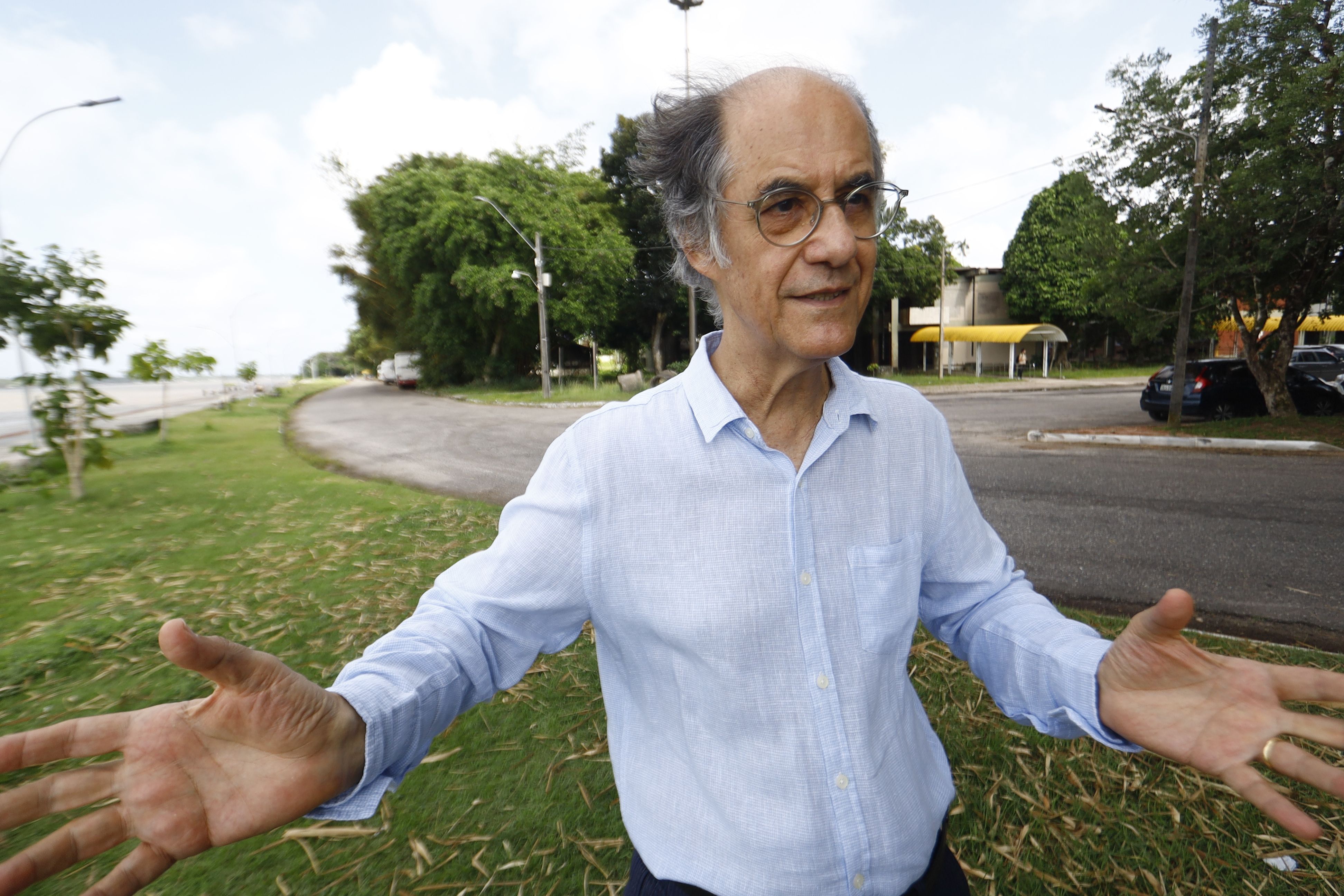
According to José Heder Benatti, professor at the Institute of Legal Sciences of the Federal University of Pará (UFPA), the Right of Nature emerges as a response to the limitations of Environmental Law, which sees nature as an object to be exploited for the realization of human interests.
“In the Right of Nature, there are two levels to highlight. The first is ethical: how human beings position themselves in the world and relate to their environment. There should be no hierarchy; human beings are not superior to animals or plants. Any human action must take into account the right of beings to live. It's not that one cannot dispose of nature, but that in everything it must be considered that the ecosystem must recover after the action. And secondly, the paradigm between subject and object is broken, in search of a harmonious coexistence,” he states.
This new way of thinking leads to debates about what exactly nature is. Benatti, who teaches the subject of Socio-environmental Law, says he has been debating this definition.
“It’s the ecosystem, the landscape, it’s the individuals. If you are going to discuss logging, you can’t just think about the wood, but about the animals that need to feed on those fruits, the impact of removing a tree, the connections it has with other trees in that system. For indigenous peoples, for example, everything in nature has a spirit. A jaguar is a spirit having an experience in the body of a jaguar. This changes the view that everything is there to serve human beings. We, like other beings, are passing through and are also part of the Earth,” analyzes the researcher.
Indigenous peoples
According to Benatti, discussions about the Right of Nature are not limited to legal and academic fields, but also take place among forest peoples, such as indigenous and quilombola communities, who, because they inhabit territories closest to nature, have a great interest in the subject.
Rayane Xipaia, an indigenous woman from the Apurinã community in Altamira, Pará, holds a degree in International Relations and is currently pursuing a master's degree in Fundamental Rights and the Environment. She works to defend the rights of indigenous peoples and the rights of nature through the UN (United Nations) International Forum of Indigenous Peoples on Climate Change.
For her, talking about the Rights of Nature means understanding that we, human beings, are also part of it. “As part of nature, everything done against it, directly or indirectly, will affect us. We have this illusion, stemming from Western modernity, that we are a separate and superior entity and that the Earth is a giant source of natural resources, waiting to be exploited and priced. It's a utilitarian and anthropocentric logic, and we need to make that leap to biocentrism,” she suggests.
From this perspective, nature has an intrinsic value that exists, independent of its monetary value. "When an ecosystem is destroyed by human intervention, environmental justice calculates financial compensation, but ecological justice speaks to the full restoration of the damaged nature, not just thinking about the affected human being," she states.
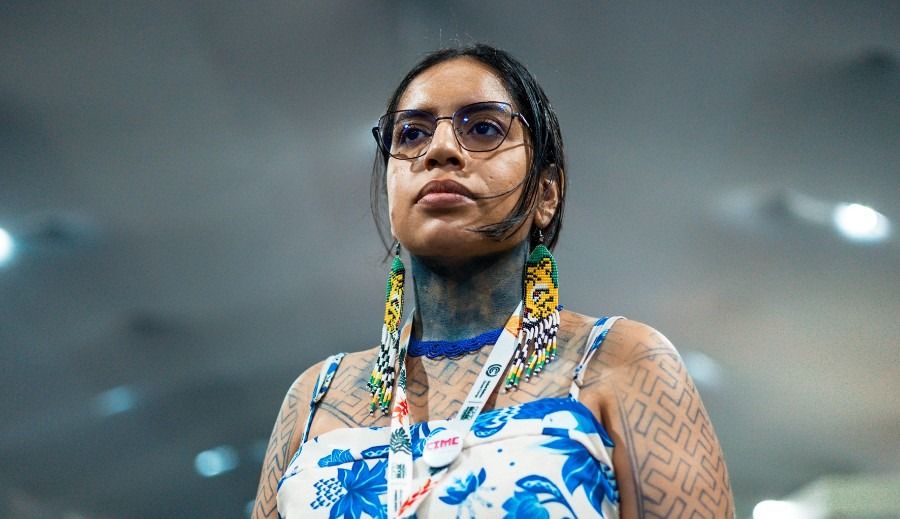
Rayane points out that the idea of the Rights of Nature is intimately related to the indigenous worldview. “For us, the Earth is a living organism. So, the river that bathes our villages is not just any abstract watershed. It's a relative, a grandmother, an uncle, a mother. It's not just a river; it's part of the memory, the culture, the local life, the history of the indigenous peoples of that region. When a river dies, or when it is suffering, we, as an extension of the river, cannot help but suffer as well,” she explains.
As an indigenous woman from Altamira, the region where the Belo Monte hydroelectric dam was built and where the Belo Sun mining project is planned, Rayane speaks with authority about the impacts of these projects on the Xingu River. “When Belo Monte was authorized, a phrase that resonated strongly at the time, uttered by a chief, said that our river would become a river of blood. It was a way of saying that nature would suffer because of it. And my father says that if Belo Monte hasn't destroyed the river yet, Belo Sun will,” she laments.
Countries in the Americas are mobilizing for the Rights of Nature
Beyond more specific legislation protecting rivers, for example, there are already initiatives around the world that establish the Rights of Nature in a more comprehensive way. Ecuador, for example, was the first country in the world to recognize such rights in its Constitution in 2008, defining that nature has the "right to exist, persist, maintain and regenerate its vital cycles, structure, functions and evolutionary processes".
In 2010, Bolivia approved the Mother Earth Law, which defines nature (Pachamama) as a collective subject of public interest, granting it legal rights equivalent to those of human beings. In 2018, the Supreme Court of Justice of Colombia recognized the Amazon rainforest as an "entity subject of rights." This obligates the government to protect, conserve, and restore the forest.
In Brazil, the indigenous federal deputy Célia In 2023, Xakriabá filed a Proposed Amendment to the Constitution (PEC) that aims to alter Article 225 of the Magna Carta, "to grant fundamental rights to beings belonging to nature and necessary for its preservation." However, the proposal has not yet received the required number of signatures from other deputies for the PEC to begin its legislative process.
In other spheres, some municipalities have already incorporated the principles of the Rights of Nature into their Organic Laws. At the state level, Minas Gerais and Paraíba are discussing, in their respective Legislative Assemblies, Constitutional Amendment Proposals to recognize nature as a subject of rights.
Quilombola communities
For anthropologist and quilombola leader Vanuza Cardoso, who lives in the Abacatal territory in Ananindeua, in the Metropolitan Region of Belém, nature has the right not to be destroyed, contaminated, or transformed into a territory of sacrifice.
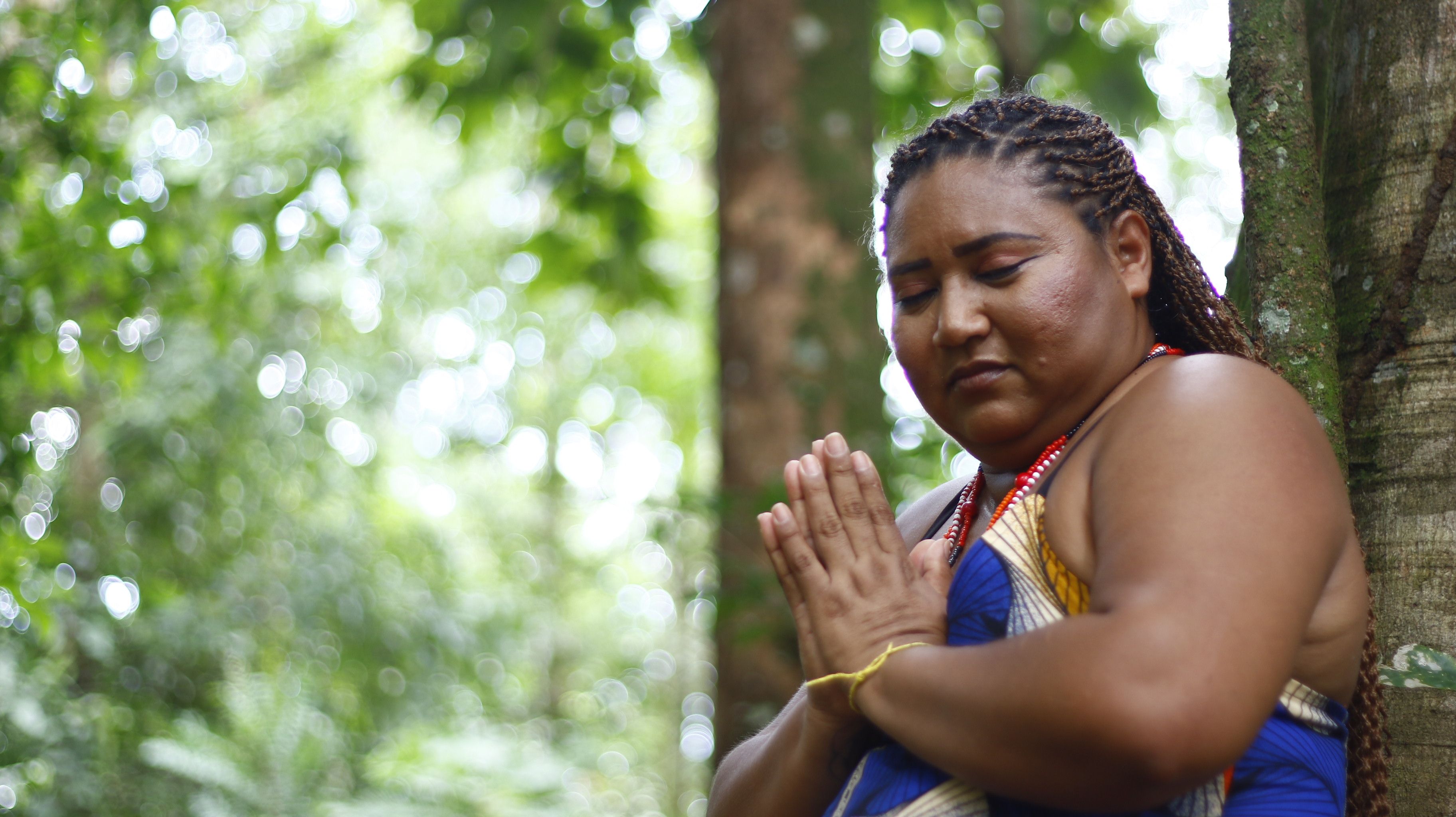
“From Abacatal, this right means saying no to projects that threaten the rivers, the forest, the soil, biodiversity, and the quilombola way of life. It also means recognizing that any decision about the territory must respect traditional knowledge and the community's right to Prior, Free, and Informed Consultation. Where nature is destroyed, the lives of the people are also threatened,” she emphasizes.
“By defending the forest, the rivers, the streams, and the biodiversity, I am also defending nature's right to exist and regenerate. A concrete example is my work defending the Lower Acará region, seeking to prevent the territory from being transformed into a sacrifice zone by projects that could cause environmental and social impacts. Territories have memory, and people have the right to continue existing in these territories. In Abacatal, we defend our territory against large-scale projects. We have learned that territory is not a commodity, the forest is not a stockpile, and the river is not a storage facility,” concludes the quilombola woman.
"The stone sings, the plant speaks
The river sees
The wind feels, the rain cries
The lighting reads
The fish dreams, the rose dances
Everything is the same being
Gaia, Gaia, everything is alive
Everything breathes, you and I
The cloud knows, the moon understands, the sun rises
Fire writes, the star sleeps
The people believe
The sky forgets, the wave remembers
Everything is the same being
Gaia, Gaia, everything is alive, everything breathes, you and I
Gaia Song,
by Nilson Chaves
INSTITUTIONAL PARTNERSHIP
The production of Liberal Amazon is one of the initiatives of the Technical Cooperation Agreement between the Liberal Group and the Federal University of Pará. The articles involving research from UFPA are revised by professionals from the academy. The translation of the content is also provided by the agreement, through the research project ET-Multi: Translation Studies: multifaces and multisemiotics.