"Due to this daily smoke, my family and I have developed coughs, sore throats, and constant rhinitis. I have an asthmatic son, and we have had to visit health clinics several times. We have also stopped walking outdoors; we only leave the house wearing masks and with anti-allergy syrup on hand." This is the account of lawyer Adinamar Souza, a resident of Manaus. Souza describes what the daily routine for residents of the capital of Amazonas has become. For weeks, the city has been blanketed by smoke that impairs visibility, seeps into homes, and suffocates its inhabitants.
For consecutive days, Manaus has experienced the worst air quality in Brazil, marking the city's poorest levels of the year, according to monitoring by the Sistema Eletrônico de Vigilância Ambiental [Electronic Environmental Surveillance System] (Selva) at Amazonas State University (UEA). One of the peaks in air quality levels deemed hazardous by Selva occurred on October 9, when a fine particulate matter (PM2.5) index of 350.9 μg/m³ (micrograms per cubic meter) was recorded. Under the Air Quality Scale adopted by the system, which is based on guidelines from the Conselho Nacional do Meio Ambiente [National Environment Council] (Conama), PM2.5 levels above 125 μg/m³ are already classified as hazardous and unhealthy.
Fine particulate matter is extremely harmful to health due to its size, which is 30 times smaller than the thickness of a hair: besides reaching the lungs, it can penetrate the pulmonary alveoli, enter the bloodstream, and cause numerous health problems.
WILDFIRES
In the state of Amazonas, Manaus is not alone in facing hazardous air quality: nearby municipalities, such as Autazes, Itacoatiara, Iranduba, and Careiro da Várzea, are enduring the same reality. Several of these towns are battling severe wildfires, the root cause of the smoke blanketing parts of Amazonas. The smoke plume, already captured by NASA satellite imagery, has even reached as far as Porto Velho in the neighboring state of Rondônia. In Itacoatiara, for example, professionals and local community members have been struggling for over a month to extinguish fires across various areas of the municipality, including within an Indigenous territory. On October 7, the concentration of polluting particles in Itacoatiara surpassed 500 μg/m³, according to Selva.
The severe wildfire situation in the state prompted the federal government to declare a state of emergency in 36 municipalities in Amazonas, accounting for more than half of the state's cities. The federal government has also deployed reinforcements to combat the fires, assisting state and municipal forces: 290 federal firefighters, two helicopters, two Air Tractor planes dedicated to firefighting, and two KC-390 aircraft from the Brazilian Air Force (FAB), capable of dropping up to 12,000 liters of water per flight, have been mobilized.
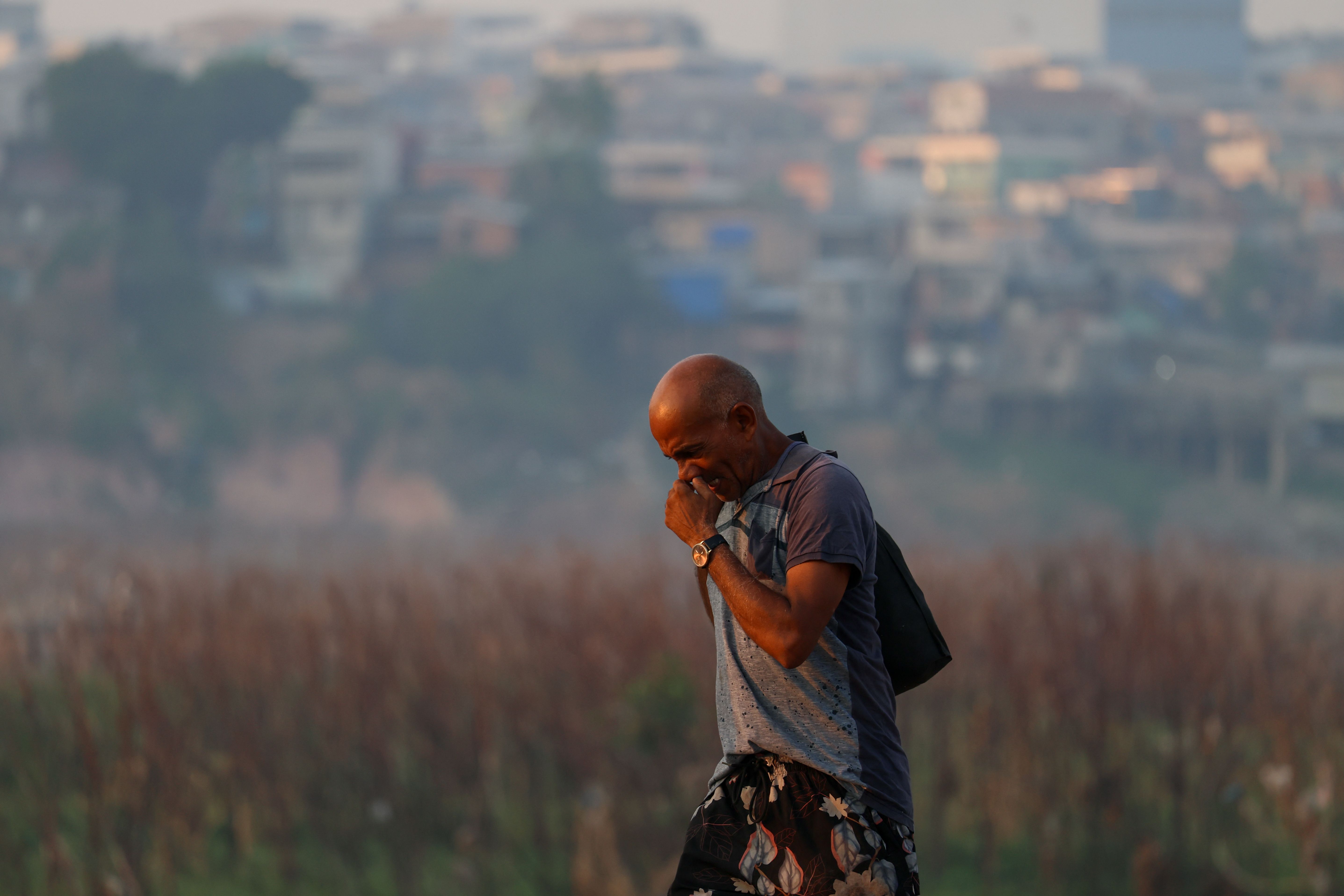
Operations with federal support began on October 12, following a visit to Manaus by the Minister of Environment and Climate Change, João Paulo Capobianco, and the Minister of Integration and Regional Development, Waldez Góes, to assess the situation firsthand. According to Capobianco, the situation they encountered was more severe than he had anticipated. “We identified numerous fire hotspots in the middle of preserved forest areas. It is not just a matter of fires set in pastures that spread into the forest. In this case, alongside the fires originating from pastures, we saw hotspots deep within the preserved forest,” he stated during a press conference. For the minister, this points to intentional and criminal human action aimed at degrading the biome and clearing the land for future deforestation.
According to data from the Fire Dashboard of the Centro Gestor e Operacional do Sistema de Proteção da Amazônia [Management and Operational Center of the Amazon Protection System] (Censipam), the first ten days of October in Amazonas saw a 271% increase in fire hotspots compared to the same period last year. This year, 1,380 active fires were recorded, up from 372 in 2025. Since September 9, in 2026, the Amazonas state government had decreed a 120-day statewide ban on the use of fire.
Outdoor events and classes disrupted
Due to the hazardous air quality, the Manaus city hall and the Amazonas state government decreed a multi-day suspension of outdoor events in the capital, including sporting activities. Classes in the municipal school system were also canceled for consecutive days. Even before the peak of poorest air quality on October 9, the Federal University of Amazonas (UFAM), the State University of Amazonas (UEA), and the Federal Institute of Amazonas (IFAM) had already suspended in-person activities. State school classes were also temporarily halted in Manaus and other affected municipalities.
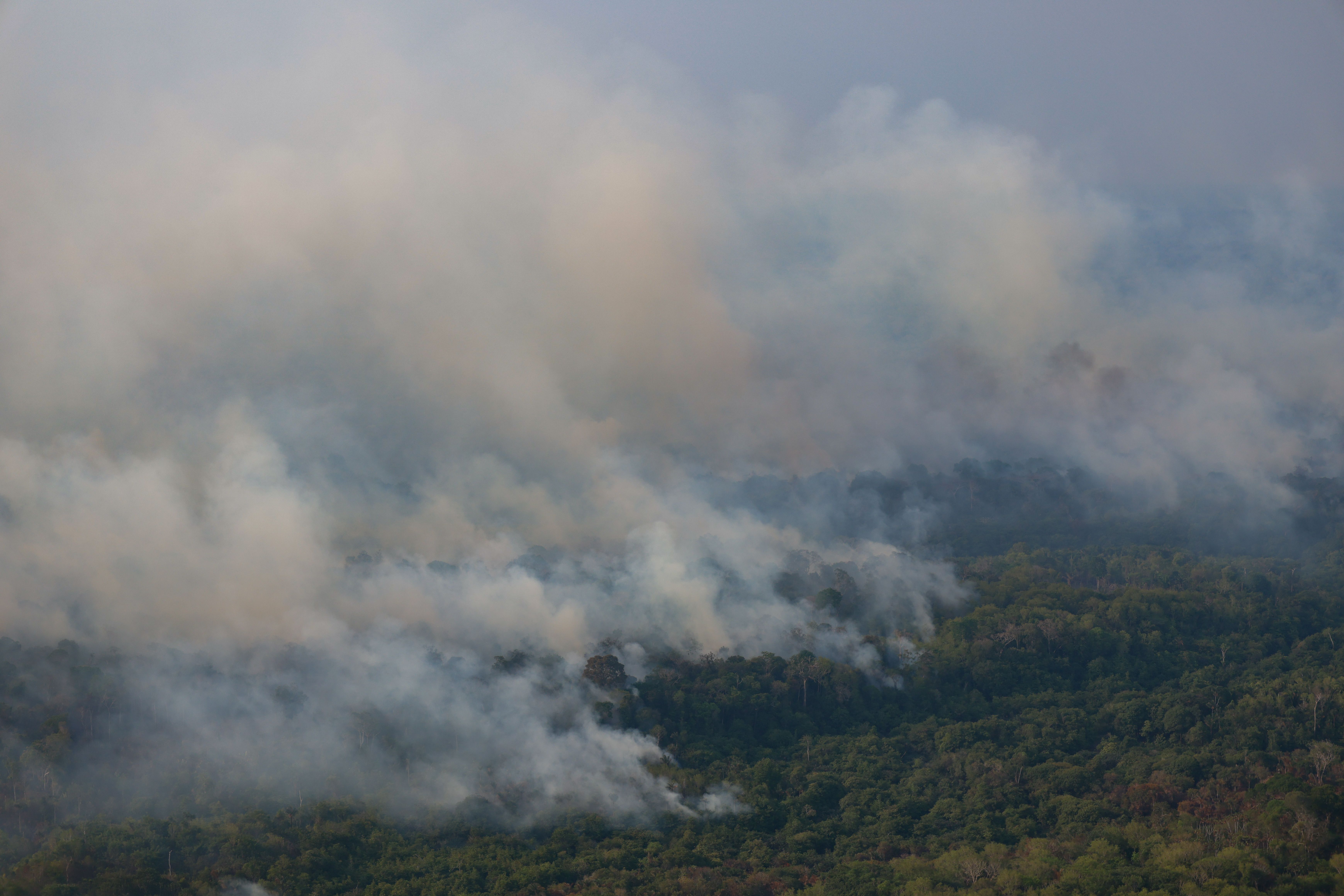
Lawyer Adinamar Souza, whose account opens this report, says that living with the smoke has been unhealthy and has impacted his family's routine. “In addition to spending on travel for medical appointments and on medications, we have stopped going to the gym to minimize smoke inhalation. This alters our physical and mental care routine, which has already been shaken by the decrease in social interaction,” he states.
Industrial painter Kendrio Santos, also a resident of Manaus, speaks about the health impacts of the smoke. “I've been experiencing chest pains, and my throat is constantly tight. Walking just ten meters leaves me exhausted, so I don't even feel like leaving the house or going to the gym. Running is out of the question. I'm wearing masks for any outdoor activity, I've increased my hydration, and I'm doing nasal washes and inhalations with saline solution,” he reports.
Colombian David Garzón, a PhD candidate in Meteorology currently residing in the capital of Amazonas, says he is surprised by the reality he is experiencing. “People told me it would be difficult to adapt to Manaus due to the heat and lack of rain, but I didn't know I would face air pollution of this magnitude. I used to leave my apartment windows open to let the fresh breeze in, but now they are kept closed all the time, despite the intense heat. But it is better to endure the heat than to breathe pollutants. Even so, in the morning, the smell of smoke inside the house is overwhelming,” he laments.
Garzón says he experiences a dry throat and coughs frequently. “I enjoy running and cycling outdoors, but since the smoke episodes began, I have stopped training. It is also very common for gatherings with friends here in Manaus to take place outdoors, and although I still meet up with them, there comes a point when we realize we are in the middle of the smoke. It is uncomfortable,” he complains.
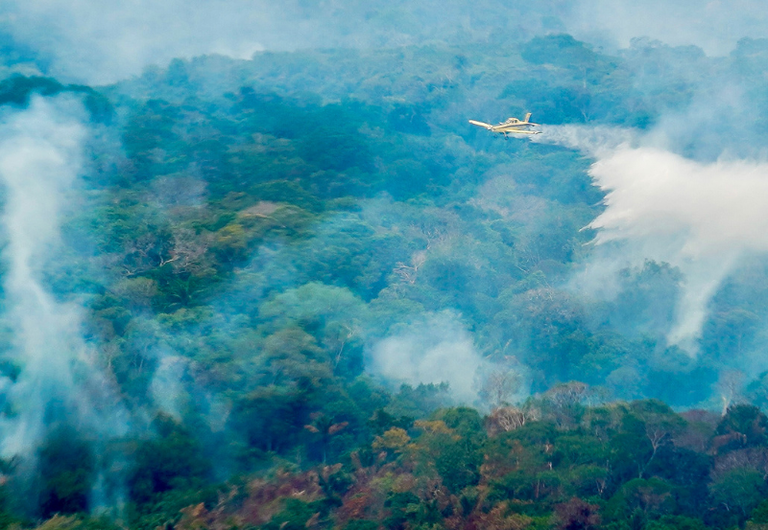
In a statement, the Secretaria de Estado de Saúde do Amazonas [Amazonas State Health Secretariat] (SES-AM) reported that it is maintaining preparedness, monitoring, and response measures to address the health impacts of the wildfires, smoke, and drought on the population. These efforts include continuous assessments across all 62 municipalities, the development of technical guidelines to prevent health complications linked to smoke exposure and extreme heat, the tracking of medical consultations and hospital admissions, and the provision of technical support to municipal health departments. The agency also noted that between October 1 and 12, the state healthcare network recorded 254 smoke-related medical visits in Manaus.
Combination of drought, El Niño, and the use of fire to clear land
According to forest engineer André Mendonça, director of the Center for Environmental Sciences at Ufam, the current crisis is linked to the extreme drought associated with El Niño, alongside a cultural tradition of using fire to clear land. “There are other methods, such as using machinery or limestone, but fire is the cheapest and simplest way to do this. And it can only be done during this period, when there is no rain. The issue is that people do not master fire control techniques. A person sets a fire in a one-hectare area to prepare for planting. But with lower humidity and drier vegetation, it spreads with terrifying ease,” he explains.
According to Mendonça, the same locations burn every year. “It is cyclical. The hotspots occur in roughly the same areas. Therefore, planning is required to address this, such as maintaining a larger firefighter presence near the areas we already know will catch fire. There is a lack of organization from both the state and society to handle this,” he assesses.
IN PARÁ
In the Amazon, it is not only the state of Amazonas that is suffering from wildfires and heavy smoke. In Pará, more than 5,000 fire hotspots have been detected between Santarém and Uruará in recent days, making the air unbreathable. In the same region of western Pará, the municipalities of Belterra, Mojuí dos Campos, Juruti, and Placas are also affected. In southwestern Pará, in Medicilândia and Itaituba, firefighters and the community are battling spreading fires that threaten to reach residents' homes. Itaituba was even blanketed by smoke, disrupting air travel. Meanwhile, in the Riozinho do Anfrísio Extractive Reserve (Resex), located in Altamira and São Félix do Xingu, houses and crops have been destroyed by the flames.
Manaus Air Hazard Atlas
The Observatório das Baixadas, an independent organization using science and technology to tackle the climate crisis in historically vulnerable areas such as urban peripheries, has created the Manaus Air Hazard Atlas. The tool cross-references environmental, urban, and socioeconomic data to identify areas where the population may be most exposed to the impacts of air pollution, taking into account not only the air quality index but also wind circulation, heat, tree coverage, and urban characteristics.
According to Andrew Leal, technical lead at the Observatory, the air quality index alone is not enough to determine who is being most impacted. “When the protective layer, the trees, is removed, exposure is significantly higher. This more severely affects people with chronic conditions, such as diabetes or cardiovascular diseases. By examining this profile, we can understand these varying impacts and also identify who is better equipped to cope with this kind of situation, such as having greater access to healthcare,” he analyzes.

For Leal, the Atlas data enables the development of public policies, such as access to healthcare infrastructure. “Couldn't we have some type of emergency mobile public facility in those sectors, circulating around the city to provide care given this scenario? That is a public policy that, to me, seems extremely timely in this situation,” he states.
INSTITUTIONAL PARTNERSHIP
The production of Liberal Amazon is one of the initiatives of the Technical Cooperation Agreement between the Liberal Group and the Federal University of Pará. The articles involving research from UFPA are revised by professionals from the academy. The translation of the content is also provided by the agreement, through the research project ET-Multi: Translation Studies: multifaces and multisemiotics.