
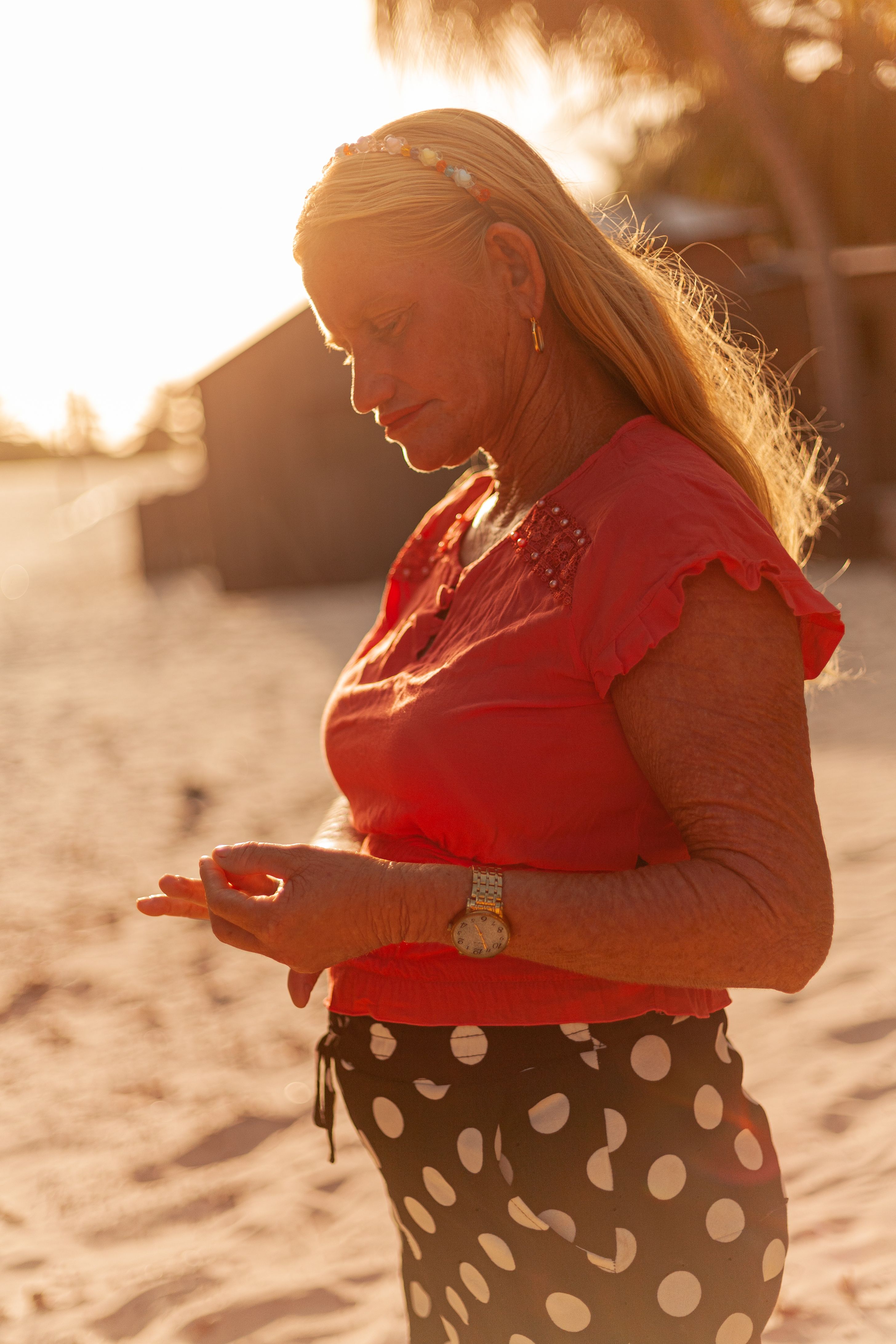
“I will only leave this island when I die”, says Edna Silva, 42 years old, who, despite having very sensitive skin to the sunlight and sand, has chosen to spend her life on Ilha dos Lençóis, in Maranhão (MA), where she was born. She is one of seven albino people living in this small community, which shows a proportion well above the world average of one in up to 20,000 people, according to the United Nations (UN).
Ilha dos Lençóis is 150 km away (about 93 miles) from the capital of Maranhão, São Luís in a straight line, and is officially part of the municipality of Cururupu (MA). The City Hall does not have accurate official data concerning the number of inhabitants on the Island, but extra-official estimates are that as many as 365 residents live there. It is a calm and very silent place, hot sun all year round and very windy at night. There are no paved roads, cars or motorcycles. Everyone walks with their feet in the sand, crossing the mangroves and the white dunes.
Listen to the comment on this news
Albinism is a rare, hereditary, non-contagious genetic condition. There is no cure and the major health risk is the high propensity for skin cancer. The World Health Organization (WHO) reports that “in some countries, most people die between the ages of 30 and 40 from skin cancer caused by the extreme sensitivity of albinos to the sun. But the disease can be avoided when albinos have access to health services”, explains the organization.
On the island, residents say that there have been about 20 albino people there, a fact that has attracted researchers and the press since the 1970s. It is believed that the high incidence of cases is due to the number of consanguineous relationships, that is, between people of the same family, which represents one of the risk factors for this genetic disorder.
The community lives mostly from fishing and shrimp harvesting. Edna's non-albino parents were also fishermen and she, herself, started fishing when she was 10 years old. "I really like fishing, but nowadays I can't do it anymore because of sensitivity to the sun, my skin dries up all over, sometimes it forms sores, it hurts a lot when I go to bed, I need to apply a lot of moisturizer", she says. She stopped fishing eight years ago, when she started receiving the Benefit of Continued Provision (BPC), a guarantee from the federal government that grants a minimum wage per month, to the elderly and to the people of any age who have some condition that makes it impossible to participate “fully and effectively in society”.
According to Edna, this adaptation for albinos is complicated, because it is not part of the local culture to take extra care with their skin, so it is as if this behavior took a wrong course, opposite from the habits of the rest of the community. Today, she spends her day at home, taking care of house chores. Only after 5 pm, when the sun begins to "go down" or "cool down" (as they say in the region about dusk) is she able to go out normally to visit relatives and friends and occasionally go fishing at night. "This situation complicated the budget a lot because part of the money we receive from the government is spent with sunscreen, buying long-sleeved shirts, I really don't have enough income, now I depend a lot on my husband's fishing", says Edna.
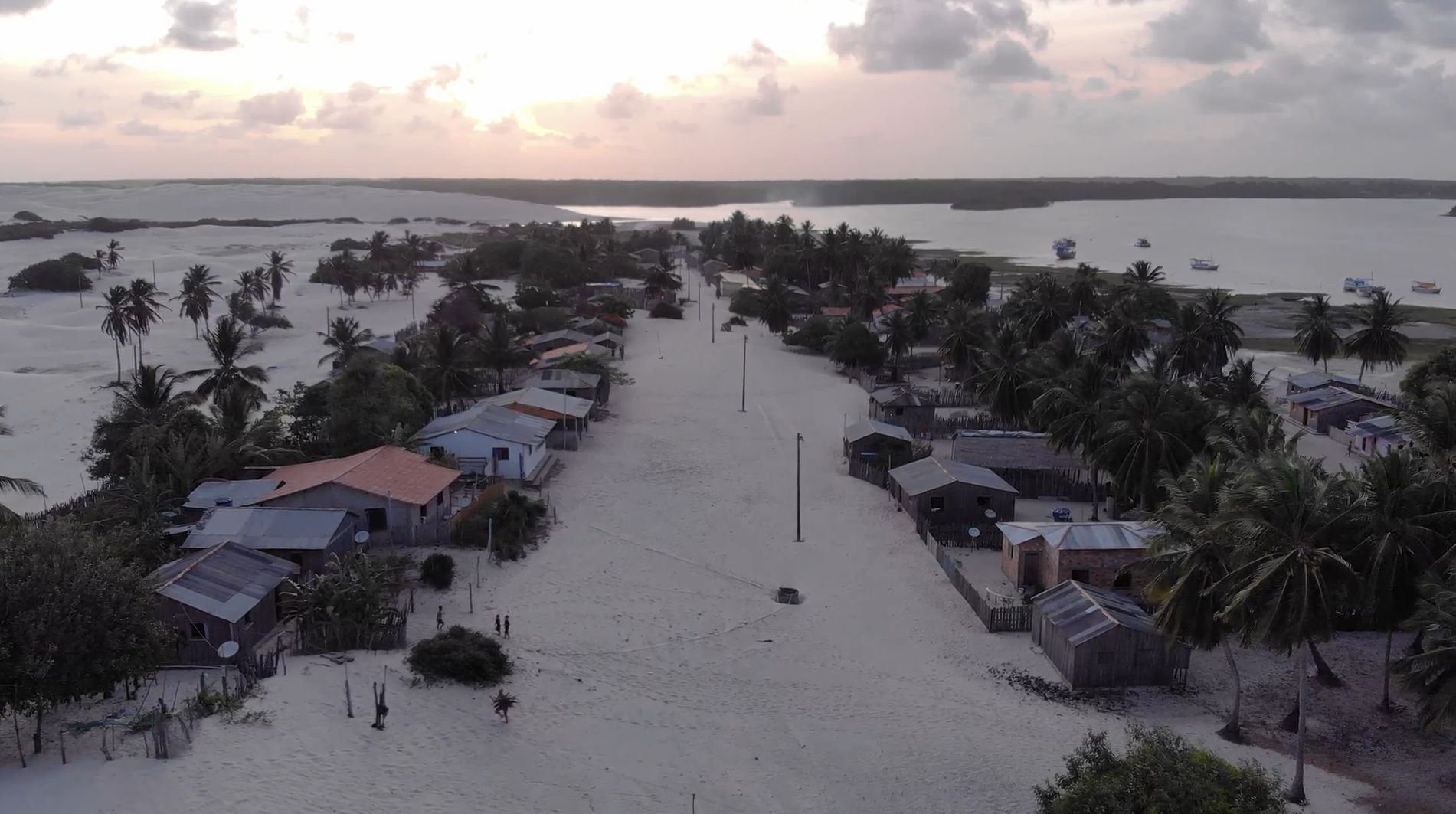
There is only one health center on the island. Despite the commitment of the team of professionals working there, the building is old and the facilities are humble, to meet basic demands. "It is very difficult to see a doctor here. When I go (to the doctor), I pay private consultation so as not to run the risk of taking too long to get an appointment or an exam", she informs. But the logistics to get around Ilha dos Lençóis are not simple. There is no official "line" boat that makes the trip to the nearest town, Apicum-Açu. To overcome this limitation, it is necessary to take advantage of getting a ride on a fisherman's boat heading in the desired direction and who charges R$ 30.00 per person for the "ride", which lasts approximately three hours.
Arriving in Apicum-Açu for her consultation, Edna goes either to Cururupu, located more than 78 km (or more than 48 miles) away, about 1 hour and 30 minutes by car, or to the state capital, São Luís, a trip that can take around six hours, considering road trip and ferry boat. “(Adding up all the expenses), every time I have to go on a trip like this, I spend a thousand reais", she summarizes.
Due to the complicated logistics, many albinos choose to move to the nearest cities, to make it easier to access all kinds of services, from shopping to solving bureaucratic issues. For Edna, the choice to stay involves an affective link with the place: “It's a quiet beach, the food is natural, I really like it. Many islands are not good, wonderful, like this. Here, we can even sleep on the street and nobody messes with us”, she justifies.
Prejudice - Even though the presence of albinos on Ilha dos Lençóis is relatively common, there is still prejudice against them. For this reason, Edna reveals that, sometimes, she thinks it would be good to have been born "Morena [brunette]", as she calls non-albinos. "I'm not ashamed of being what I am. I’m very proud of my skin (...). But being 'brunette' could have been better because I wouldn't suffer prejudice, right? I've been called a lot of things, 'hairless', 'rotten skin'", she laments.
Parents fight for the well-being of children with hereditary disease
Unlike albinism, most rare conditions are difficult to diagnose. Currently, it is estimated that 13 million Brazilians suffer from some rare disease. However, there is no global consensus on what is considered a rare disease, as each country has its own criteria.
In Brazil, a disease is considered rare when it affects up to 65 people in every 100,000 individuals. Due to this context, it is difficult to correctly and quickly diagnose and provide treatment when something unusual is noticed in someone.
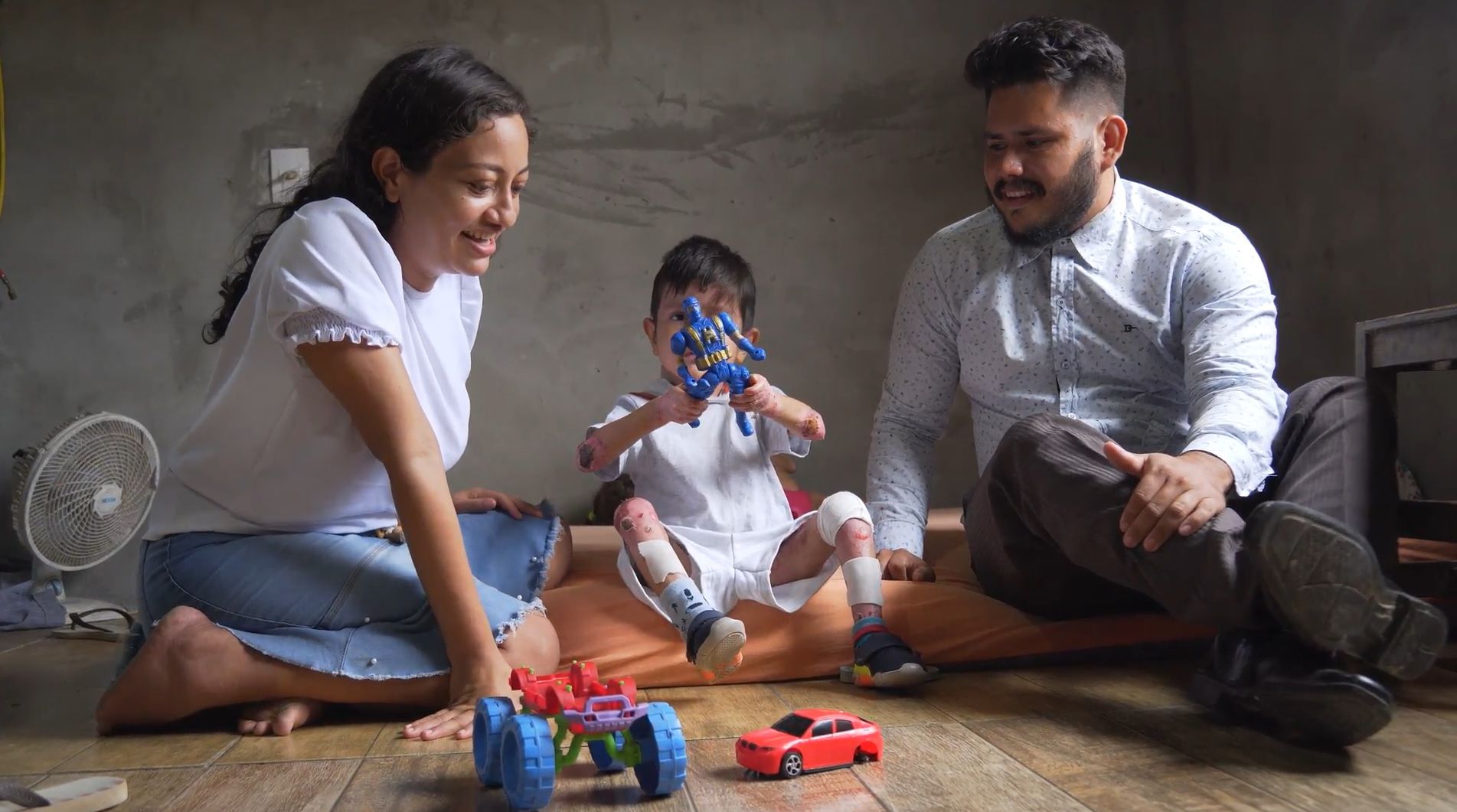
When João Pereira was two days old, blisters appeared on his face and hands. His parents were immediately worried and surprised, and tried to find out what was going on. The family is from Bagre, a municipality in the interior of Pará, located in the Marajó Archipelago (also known as Ilha do Marajó), 12 hours away by boat from the capital, Belém.
But João was born at the Regional Hospital of Breves, the health center with the largest facilities in the archipelago. When it was noticed that the patient needed greater care, he was transferred to Belém, to the maternity hospital of the Santa Casa de Misericórdia do Pará. After some possibilities were discarded, it was there where he received the correct diagnosis: epidermolysis bullosa. The disease is hereditary and causes the formation of blisters on the skin when minimal friction or trauma occurs. There is no cure, and it is not a contagious disease. According to information from the Ministry of Health, it is estimated that around 500,000 people worldwide suffer from the disease - 802 of them are in Brazil.
Similar to albinism, one of the risk factors for the disease is having parents who are blood relatives, as it is also João’s case. His mother, Eloisa Pereira 25, a Natural Sciences teacher, is her husband's cousin, Valdir Teixeira, 27, a pedagogue.
After his birth, João was hospitalized for three months in Belém, and Eloisa remembers that period with tears in her eyes. "When I see the photos from that period, what I feel is pain. We had no answers and we had to rent a small apartment to stay there during that time", says the mother. According to Eloisa, what helped the family at that moment was talking, through social networks, with doctors and other mothers of patients with epidermolysis bullosa. “I met a specialist from another state who guided us on the most recommended procedures in his case, since, in the hospital, there was not this more specialized service", she recalls.
The next step, then, was to be discharged from the hospital, because there the boy was more susceptible to infections, as his skin was fragile. Afterwards, the parents found a specialized treatment service at Hospital Barros Barreto. This institution, together with the Bettina Ferro Hospital, integrates the Hospital Complex of the Federal University of Pará (UFPA)/Empresa Brasileira de Serviços Hospitalares (Ebserh), where diagnoses and treatments are offered for several rare diseases.
"In the beginning, we had to go there every week and the trip was even more complicated than it is now. We had to go to an island near Bagre, in a riverside house, in the middle of the river stem, waiting for a boat to pass by to pick us up. It wasn't a structured port, we had to cross a bridge straight to the boat, holding the baby and our stuff in our arms, it was such a mess", she shares. Each trip to the capital, according to Eloisa, costs around BRL 1,000 Reais, including tickets, taxi, accommodation and food, which is almost the entire amount that the family receives from the Benefit of Continued Provision.
The region lacks qualified reference centers
Now at four years old, João has the disease under control. His parents already know what to do when blisters appear and how to avoid more serious wounds. Trips to Belém are now twice or three times a year for medical care. But, to reach this stage, it took intense dedication from the parents, something very common to happen in cases of rare diseases.
"We know that there is a type of bandage specially made for this disease nowadays, which is much more comfortable for João ", explains the mother. SUS offers these special bandages free of charge, but there is a bureaucratic procedure before getting them. So, Eloisa has a whole prior schedule to ensure the access to the free bandages for her son. “Once, I checked out the price to buy them on my own and, in addition to being very difficult to find, they cost about R$ 1,200.00 Reais, just enough for three days of treatment”, says Eloisa.
Treatment - Since 2014, There is the National Policy for Total Care for People with Rare Diseases in Brazil, a policy which reinforces the right to complete care, free of charge, for people affected with rare diseases by the Sistema Único de Saúde (SUS) [Unified Health System] and It also establishes financial incentives to qualified reference centers, which must provide exams, consultations with a multidisciplinary team and treatment, among other services. Of the 12 qualified centers in the country, none is situated in the Legal Amazon. In each state in the region, health units, hospitals and universities fill this gap in patient care. The Hospital Complex of the Federal University of Pará (UFPA)/Empresa Brasileira de Serviços Hospitalares (Ebserh) is one of the places that offer diagnosis and treatment and, at the moment, is seeking authorization at the federal level.


