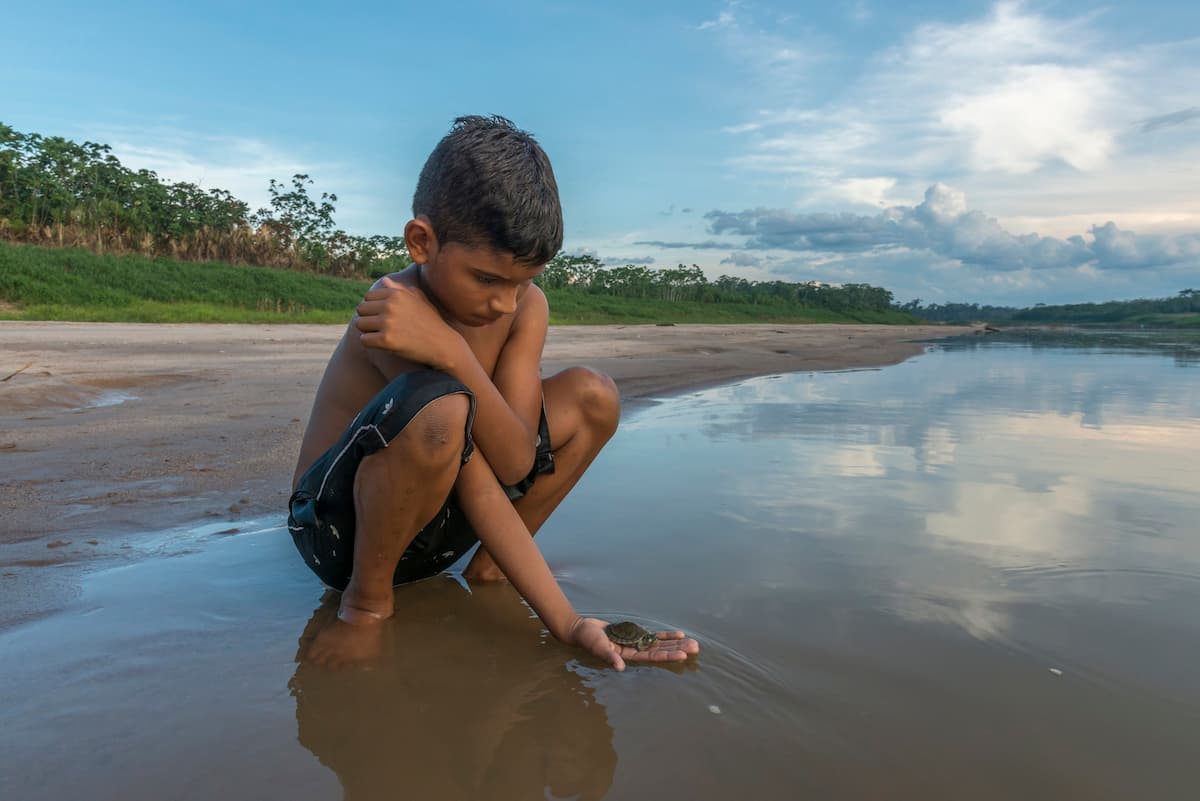
Mitigating the negative impacts of solid waste and preventing it from simply becoming "garbage" is crucial throughout the world, but in the Amazon, this awareness becomes even more important.
After all, the Amazon is an ecosystem where rivers and springs, coastlines, mangroves, groundwater and countless animals and forest areas pulsate. In other words, this environment is definitely not conducive to the proliferation of plastics or metals without correct disposal, a practice that is still very common, especially in urban centers and metropolitan regions.
The solution is recycling – a market that raised R$4 billion in the plastics sector alone in 2022, but also lost R$5.7 billion due to the lack of correct management of discarded waste.
Also, last year, 82 million tons of waste were discarded in Brazil and only 4% of this total was recycled. The data is from the International Solid Waste Association. These are numbers that may seem discouraging at first glance, but which reveal a huge gap for a new sustainable and profitable industry.
Eleven years ago, Jucélio Soares realized recycling represented an opportunity and decided that action in that direction needed to be taken: guarantee large-scale recycling, generating income for the collectors.

"If there is a place where the practice of recycling should be increasingly relevant, it is the Amazon. It helps to reduce the exclusive dependence on inputs extracted from nature and mineral exploration, which, in turn, helps combat climate change. Iron scrap, in the process of new steel production, drastically reduces carbon emissions into the atmosphere, in addition to decreasing the use of electricity and the ore itself. It is important to remember that iron and aluminum scraps are infinitely recyclable, with countless possibilities of use. Simply throwing these metals away in the trash and doing nothing is not an option. Today we see a strong debate about decarbonization of the steel production process, called 'green steel' in Brazil and already present in Açailândia (municipality in the State of Maranhão), with the company Aço Verde do Brasil [Green Steel of Brazil], using scrap as raw material and hydrogen as energy. It is a process that the world is pointing towards and that the Amazon needs to be part of", defends Jucélio, who is the founder of Norte Amazônia, a company specialized in scrap management located in the municipality of Benevides, in the Metropolitan Region of Belém.
CHALLENGES
Converting scrap into commodities is an expensive and time-consuming process. It all begins with the phase called segregation, in which impurities are removed, such as traces of rubber, plastic and wood. After this, it is necessary to process and press with hydraulic equipment, which transforms the scrap into square blocks like those seen in the Oscar-winning animation entitled "Wall-E" (2008). And there are also the “cuts” – in a phase called shearing – which make it possible to have everything standardized according to the buyers' needs. All this material that would previously have been discarded is transformed into rebars, bars and even cans. But, before all this take place, the first step – the most important one – consists in collecting waste with the support of waste pickers, cooperatives, small scrap dealers and large and medium-sized scrap generators.
Brazil surpasses rich countries in collecting aluminum cans
Scrap prices vary like all commodities. One kilo of iron scrap, for example, costs R$0.80 and one block weighs 200 kilos. The aluminum is lighter, but the kilo is traded at R$6, which explains the significant rate of can picking in Brazil, which exceeded 99% in 2021. As a result, Brazil became the largest collector of aluminum cans in the world, surpassing countries like Japan and the United States. But there is still a lot to improve.
"There is no support from the public and private sectors. Working with recycling is often seen as working with garbage. This fact already marginalizes the activity and the waste pickers themselves. There are also practical limitations, such as the lack of credit lines for recycling companies. It is a systemic issue that affects the entire chain. Waste pickers need supplementary income for their professional practice, which is something that starts to emerge, still in a very early stage with the federal government's program 'Pró-Catador'. What waste pickers are able to collect and sell does not guarantee a decent life. There are no exemptions or facilities in taxes. How is this possible, if it is a beneficial activity for society with expensive equipment and a lot of labor?", laments Jucélio Soares, from the company Norte Amazônia.
LOGISTICS
Agricultural engineer Daniela Portal agrees with Jucélio's opinion. She began working in a voluntary basis with waste pickers in "Lixão do Aurá" [Aurá dumping ground], located in the Metropolitan Region of Belém, and ended up getting closer to twelve cooperatives that operate in the capital of Pará, providing consultancy, forming associations and establishing connections with companies and institutions. According to her, other sensitive challenges need to be resolved.

"We have plenty of natural resources in the Amazon, but we have noticed negative impacts due to irregular waste on the environment. Recycling is an opportunity to reverse this scenario, but we do not have enough industries to absorb or buy this material. Logistics and distances are problems. Since the Amazon is far from major purchasing centers, shipping is more expensive. And if we sell to 'middlemen' in Pará, they want to pay very little, with almost no profit for waste pickers.
It is really difficult to recycle glass for us. I always say that everyone should drink their beer sometimes, but buy aluminum cans. We have very high demand for glass recycling in the Amazon, but the closest buyer company is located in the state of Pernambuco. Shipping cost to transport 23 tons of glass is unfeasible. Not to mention paying ICMS tax (Tax on Circulation of Goods and Services). If there were more awareness on this topic, more banks would invest, as cooperatives need working capital. There are many opportunities to advance, because it is a market that has greatly increased. Hunger is painful, so people work and want dignity. Today, cooperatives understand that they can become companies. Many cooperatives are now able to store material for 15 days before selling and sharing profits in an organized manner. There is more and more training, but city halls need to hire these cooperatives, so that municipalities can encourage this selective waste collection that generates jobs and income", she says.
LEGACY
Jucélio still feels hopeful about the recycling industry, despite the difficulties. And there is a reason: he learned to like this topic because his grandfather, Egydio Viggiano, had been sure for decades that recycling was the only possible future.
"He was a scrapyard owner. He was known as “the king of scrap'. He started as a mechanic, collecting metal scrap. Then, a steel company bought everything he had stored. So, I was inspired by his story. Birthday parties and Sunday barbecues were always in his scrapyard. I was always there playing with my cousins, climbing mountains of scrap metal. For me, recycling means honoring his work. We have to be the change we seek in the world. Taking this responsibility of working in the Amazon with the surrounding communities, generating income, with social projects in the municipalities. I tell my children that we have to help protect the planet and work to postpone the end of the world every day", says Jucélio.

Initiatives promote recycling in the States of Pará and Amazonas
Now imagine the following scene: surfers enjoying the beauty and waves of the Amazon coast and, suddenly, bumping into mountains of trash on the sand and in the water. "No way. We had to do something", says Brenda Lopes, a psychologist specializing in sustainable development and environmental education at the Manguezal Institute.
So, a group of surfers and environmental professionals decided to create the "Tenda Verde" project, to work promoting awareness and waste collection in bathing sites in the State of Pará, such as those in the municipalities of Salinópolis, Barcarena, Algodoal Islands (in the municipality of Maracanã ) and Mosqueiro (in the capital of Pará), setting up tents that, in addition to collecting waste, offer surfing lessons, composting techniques, reuse tips and also mobilize universities and research institutes.

"The time for this debate is now. You buy a bottle of mineral water for five reais and, after drinking the liquid in a minute, it is no longer worth anything? We cannot accept that. We contacted the National Movement of Waste Pickers and we brought together all of them in the region. Waste pickers were previously marginalized, but today we celebrate this profession, help with training and contact with buyers. They are “urban miners”, as 20 plastic bottles are worth R$ 2 reais. This is a conversation that involves business owners, consumers, waste pickers and that needs to be more common. We want to spread this culture that plastic and no other kind of waste can be single-use. Waste is not the villain; the villain is the lack of reverse logistics. Everything is interconnected. Selective waste collection is profitable, much better than overloading landfills with plastic. If there were investment in proper trucks for separation, with advertising campaigns, we could generate jobs for 1% of the population of Belém, for example", guarantees Brenda.
In Manaus, in the State of Amazonas, another successful initiative is the "Drive-thru Ambiental". Founder Thiago Andrade noticed that, during the Covid-19 pandemic, people no longer felt safe to go to dispose waste at recycling points they previously used to go, due to social isolation. Thanks to his idea, now everything can be done by car when you are out running some errands. The initiative takes place on the first, second and third Saturday of each month, with tents open between 8:30 am and 2 pm. It seems like a simple idea, but the results are impressive: two thousand tons have already been collected since September 2020.
Donation
"It's a concept of humanized management, because we emphasize that nothing is waste. Some things may no longer be useful for us at that moment, but they can be of great value to waste pickers, improving their quality of life. We have support from companies, such as Sanitek and Construtora Capital, in addition to condominiums, as the collectors take everything and sort it to sell. But the impact is not just on their lives, but on the entire city. Recycled waste does not pollute streams, public roads, river banks... We always use the term 'donation' and not 'discard', because then people understand that it is not garbage, that it helps people. Almost everything we call waste is, in fact, money that can help people who need it", she explains. (E.L.)