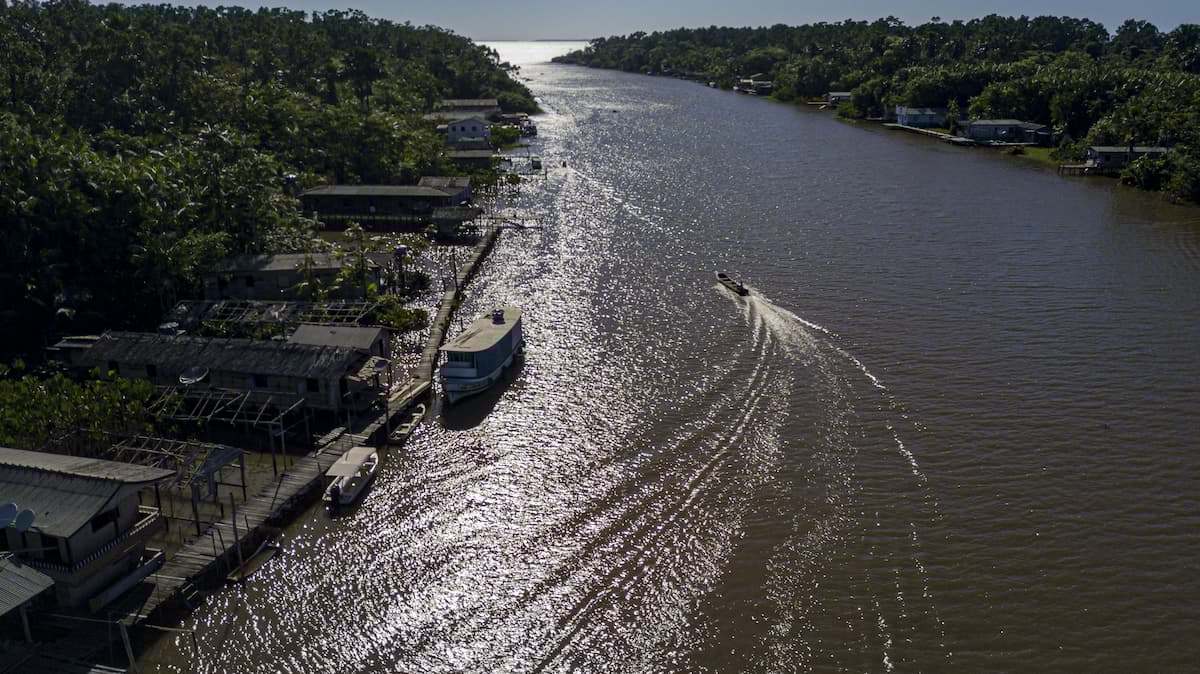
The UK Minister for Environment, Food and Rural Affairs, Thérèse Coffey, was in Pará last week to learn about sustainable agriculture and bioeconomy projects in the quilombola community of São Manoel, in the municipality of Moju, which will be one of the beneficiaries of the Sustainable Rural Program in the Amazon, funded by the British government.
The initiative is in its second phase and seeks to value extractive cultures based on standing forest and will make available 7.2 million pounds for the Brazilian states of Pará, Amazonas and Rondônia. The amount is part of a total investment of 62.3 million pounds that the UK has made available to financially support sustainable projects in Brazil since 2017.
Coffey was accompanied by the British Ambassador to Brazil, Stephanie Al-Qaq, and saw up close the production of typical foods of the region, such as Brazil nuts, açaí, black pepper, cupuaçu and cocoa, all resulting from the system known as "plantation without fire", without burning and without harming the environment.
In Coffey's opinion, the experience of the Moju producers should be enhanced and serve as an example to the world. She believes that the knowledge accumulated by the quilombolas in the region needs to be converted into prosperity and better living conditions for those who work in this economic chain.
"It was an incredible experience because we are used to seeing only the final product, after all the processing. But now I saw everything from the beginning, with the product in natura, with low carbon emissions, with natural fertilizers that result from millenary techniques of the Amazon people, with the participation of the entire community. They are true guardians of the forest. Besides, the Pará bio-economy plans are interesting and match the objectives we seek in the United Kingdom", he states.
Watch the video (in Portuguese):
President Lula - Coffey came to Brazil to represent the British at the swearing in of president Luiz Inácio Lula da Silva (PT) and said she was excited about the partnerships with the new government, especially because of the choices of Marina Silva and Sônia Guajajara for the ministries of Environment and Climate Change and Indigenous Peoples, respectively.
"I was very grateful to meet with them already on the first day of the government. We already had established relationships with the Brazilian government, but now it is more evident how big the will and ambition of the Lula administration is when it comes to the environment, climate change and sustainable agriculture. With the role that Lula gives to the female ministers, it is remarkable that this is now part of the heart of the government," she says.
For ambassador Stephanie Al-Qaq, the partnership between the two countries is already robust, but there are opportunities for it to be even stronger. "Hearing from people from Pará the challenges of protecting and producing with the living forest was inspiring. Being here also helps us to understand the plans of the state government and how we can support it. People are increasingly aware of the origin of products. Today I ate so many products straight from nature, without preservatives, without sugar. And this will be increasingly valued. So Pará has a lot of advantages to gain with this moment of prominence in the bioeconomy, as it is a market that is growing".
The Sustainable Rural Program also has partnerships with the Brazilian Institute for Development and Sustainability and the State Secretariat for the Environment and Sustainability, as well as the Ministry of Agriculture, Livestock and Supply.
Amazon Fund - Currently, the United Kingdom is Brazil's third largest partner in climate and environment, with more than 250 million pounds destined for Brazil. In an interview with Reuters, Coffey said that the United Kingdom is "seriously" analyzing the country's entry into the Amazon Fund, which already supports sustainable initiatives in Brazil with financial support from Germany and Norway.
Quilombolas believe that doors will open after visit
Right now, the financing of projects of the Sustainable Rural Program in the Amazon in Moju still depends on public notices to be released for producers to register. But for Maria das Dores Freire, president of the Quilombola Association of Farmers of São Manoel, the hope for better working conditions and the reduction of poverty in the region is already on the horizon.
Currently, 20 families in the community are involved in planting, harvesting and selling regional products. Freire has been working in the fields since she was a child and learned everything when burning was still part of the family routine. Everything changed nine years ago, when Michinori Konagano, from the Cooperativa Agrícola Mista de Tomé-Açu, changed the quilombolas' view of the extractive process with new techniques that include organic fertilizers and seasonal planning. Burning was then abolished.
"The work in the fields without fire is built very slowly because many people do not believe that it can prevail. In addition, financial resources are lacking, it is hard work, with hands, with axes, in a rough way and without machines. This visit can make other people believe that our work is good and that it is worth investing in it", he says.
Another challenge is adding value, since the products are sold in natura due to lack of processing conditions.
Francisco Martins is a producer and dreams of seeing the fruits of the land leave the quilombola territory ready for consumption, packaged with the community seal and recognized around the world.
He produces açaí, cocoa, banana, black pepper and dragon fruit and estimates that the machinery needed to boost production in the region would cost around R$500,000.
"I am happy because this visit brings visibility. We still have many obstacles with the issue of infrastructure, production flow. Our differential is to produce on a large scale without harming the environment, without cutting down, without pesticides, without touching fire. And we are proud of that. I hope that in the future we can overcome these barriers", he says.