Central Amazonia, in the state of Amazonas, is one of the most preserved regions in the country and, therefore, climatically strategic for Brazil. However, this balance may be threatened by a major infrastructure project: the paving of BR-319, which connects Manaus to Porto Velho. At least, that is the warning issued by environmentalists and other experts on the subject.
The concern is that the construction work could open new frontiers for deforestation in the region, contributing to all kinds of environmental crimes. On the other hand, politicians, representatives of the agribusiness sector, and the Federal Government support the project, which they view as essential for regional development and for ending the isolation of local communities.
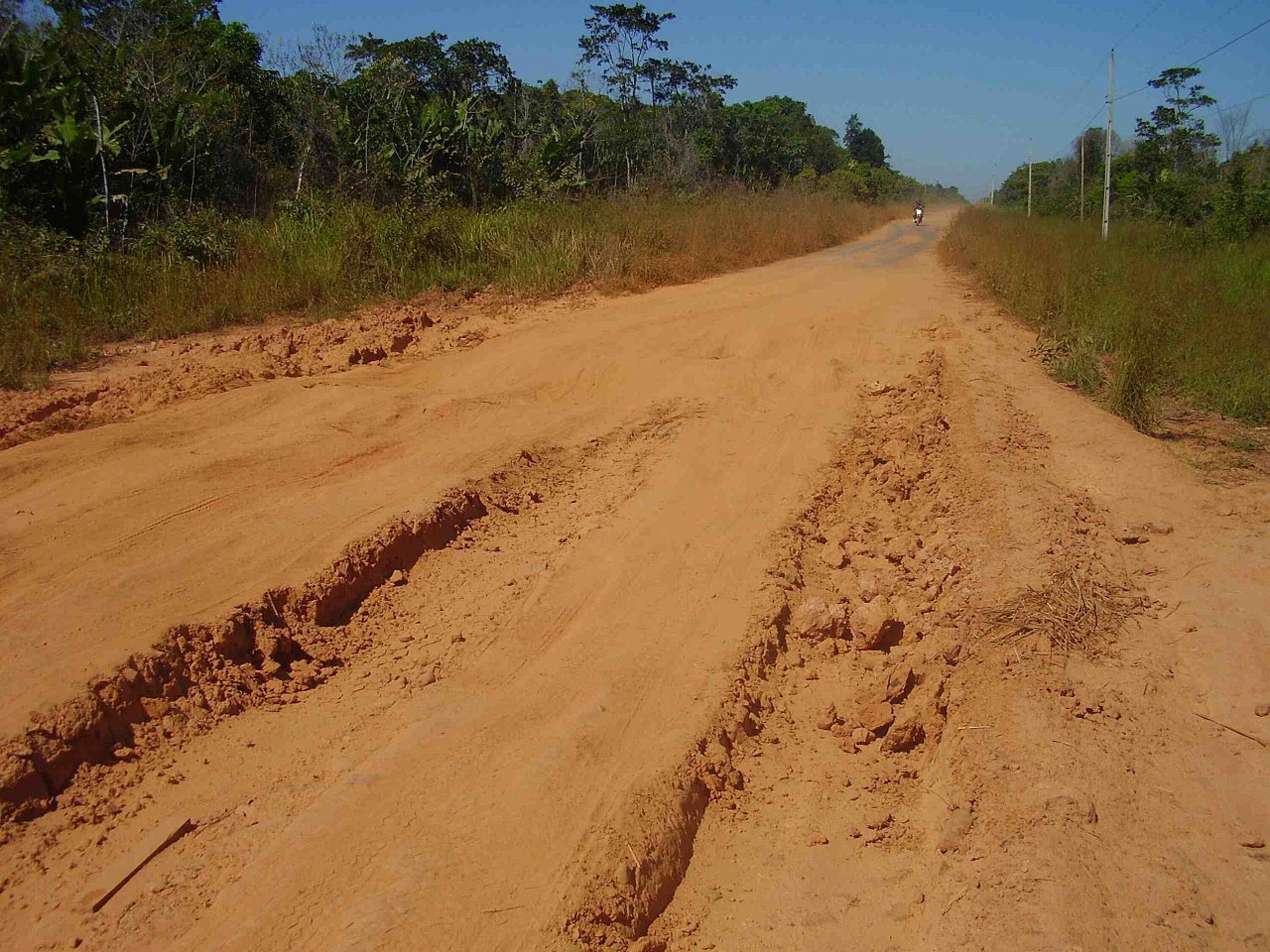
A legacy of Brazil’s military regime, like the Transamazônica (BR-230), BR-319 was inaugurated in 1976 but was never fully completed. Of its nearly 900 kilometers in length, only the 200 kilometers closest to Porto Velho and the 250 kilometers nearest to Manaus are properly paved. The so-called “Trecho do Meio” [Middle Stretch], totaling around 340 kilometers, consists of an unpaved road in precarious condition.
Legal deadlock
The initiative to pave BR-319 has recently faced legal setbacks, involving a “battle of injunctions” over whether to suspend or maintain the bidding process for companies responsible for carrying out the construction work.
On April 13, the “Departamento Nacional de Infraestrutura de Transportes” (DNIT) [National Department of Transport Infrastructure] launched four simultaneous bidding processes for construction work on BR-319, covering four different stretches between kilometers 250.7 and 656.4. On April 24, “Observatório do Clima”, an environmental organization, filed a public civil action with the Federal Court in Amazonas seeking the cancellation of the bidding processes. On April 28, an injunction temporarily suspended the bidding processes, but later that same night another court decision overturned the injunction, restoring the procedures. As a result, the first two bidding rounds were opened on May 4, while the remaining two were rescheduled for May 20.
But the decision has been challenged by Lucas Ferrante, a biologist and researcher at the University of São Paulo (USP) and the Federal University of Amazonas (UFAM), who studies issues related to BR-319. “The injunction that suspended the bidding processes was technically well grounded and acknowledged the seriousness of the socio-environmental risks associated with the project, including impacts on the environment, public health, and the rights of Indigenous peoples and traditional communities. These risks are not hypothetical; they have been documented in studies published in internationally renowned scientific journals such as The Lancet, Nature, and Science,” Ferrante argues.
Impacts
For the researcher, the decision to maintain the bidding processes is a troubling sign of science denial and the weakening of socio-environmental safeguards. “When decisions about infrastructure projects in the Amazon are made without properly considering scientific evidence, public health risks, climate impacts, the expansion of deforestation, land grabbing, and the rights of affected peoples, the result is institutional authorization to deepen a crisis that is already underway. BR-319 represents one of the main fronts of pressure on the heart of the Amazon, and any decision regarding its future must be proportional to the historical, environmental, and social gravity involved,” he emphasizes.
The researcher explains that the impacts of the project would be profound and potentially irreversible. “The highway is likely to function as a corridor for disorderly occupation in the heart of the Amazon, encouraging the opening of illegal side roads, land grabbing, the expansion of cattle ranching, illegal logging, mining, land conflicts, and the spread of criminal organizations. This process has already been intensifying merely due to the announcement and expectation of the construction works,” he points out.
According to the biologist, all of this would lead to the spread of climate anomalies into Central Amazonia, including extreme heat, severe droughts, smoke pollution, and other related problems. In addition, there is a public health risk that could reach a global scale.
“As we pointed out in studies published in journals such as Nature, Science, and The Lancet, the region is home to a still largely unknown diversity of viruses, bacteria, and other microorganisms with the potential to trigger outbreaks, especially when the forest is degraded and human populations come into greater contact with these reservoirs,” the biologist notes. Lucas Ferrante is one of the authors of a study on the subject estimating the existence of more than 18,000 pathogens in the region crossed by BR-319, with concerning characteristics such as high virulence, toxicity, and antibiotic resistance, which could potentially lead to a new pandemic.
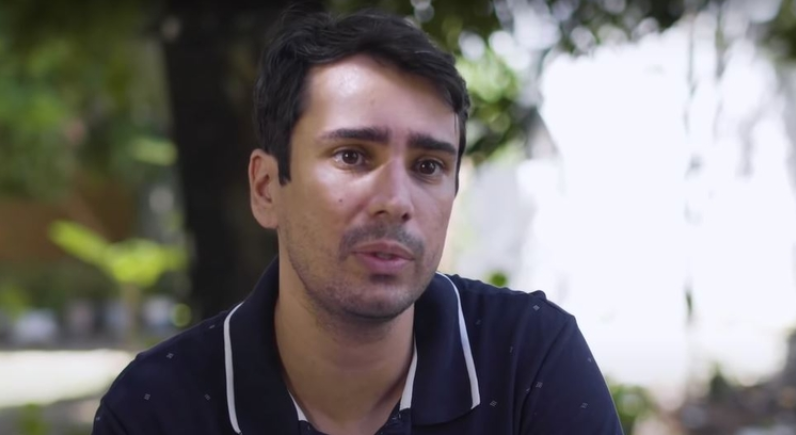
“In addition to the risks to human health, pathogens with the potential to impact agriculture have also been identified, including threats to crops that are often used to justify infrastructure expansion, such as soybeans. This could ultimately compromise the country’s own agricultural economic base,” Ferrante adds.
Indigenous peoples were not consulted before the construction works
Another study conducted by Lucas Ferrante concluded that the construction works on BR-319 could affect 68 Indigenous territories in the region. None of the potentially affected Indigenous peoples were consulted, as required under International Labour Organization Convention 169, which establishes that Indigenous peoples must be heard before the implementation of such projects.
Nilcelio Jiahui, a member of the Jiahui people and representative of the “Organização dos Povos Indígenas do Alto Madeira”, says his village, located 90 kilometers from BR-319, has already been affected. “It has impacted not only my people, but also the peoples living along the highway, such as the Mura and the Parintintin. These construction works have social, environmental, and security-related consequences. They are bringing more invasions and several negative impacts for Indigenous peoples. And projects of this scale should involve prior consultation with us. We are not against the project itself, but we do not want it carried out arbitrarily. Consultation must take place first, and only then can it be determined whether paving the highway is possible or not,” the Indigenous leader says.
Environmental licensing
According to Lucas Ferrante, the socio-environmental impact studies conducted so far are insufficient. “The Environmental Impact Assessment prepared for the National Department of Transport Infrastructure (DNIT) contains serious technical flaws in a licensing process that, at the end of the Jair Bolsonaro administration, resulted in the issuance of a weak license incapable of ensuring environmental, social, and public health safeguards. And now DNIT is relying on the General Environmental Licensing Law in an attempt to exempt BR-319 from the licensing process,” the researcher explains.
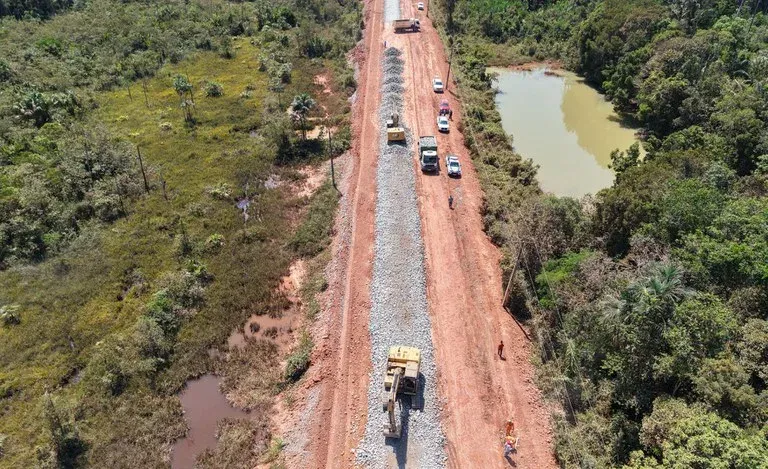
The law cited by Lucas Ferrante, which came into effect three months ago, states in Article 8 that projects involving “services and works aimed at the maintenance and improvement of infrastructure in pre-existing facilities or within rights-of-way and easements, including previously paved highways and maintenance dredging,” do not require environmental licensing. The National Department of Transport Infrastructure (DNIT) relies on this provision to classify the works on BR-319 merely as improvements, since the highway was originally opened in the 1970s. In practice, however, the project would require a full reconstruction of the roadway.
Local residents support the construction works and highlight their benefits
Despite the opposing voices, those who live or work along BR-319 dream of seeing the project completed. That is the case of Jeová Bernardo, who lives at kilometer 298, where he runs a camping area. “This paving project would bring many benefits, because we are very isolated here when it comes to accessing healthcare and buying food. With the highway paved, there would be more traffic, more vehicles passing through and stopping at my campsite to spend the night. For us, it would be a dream,” he says.
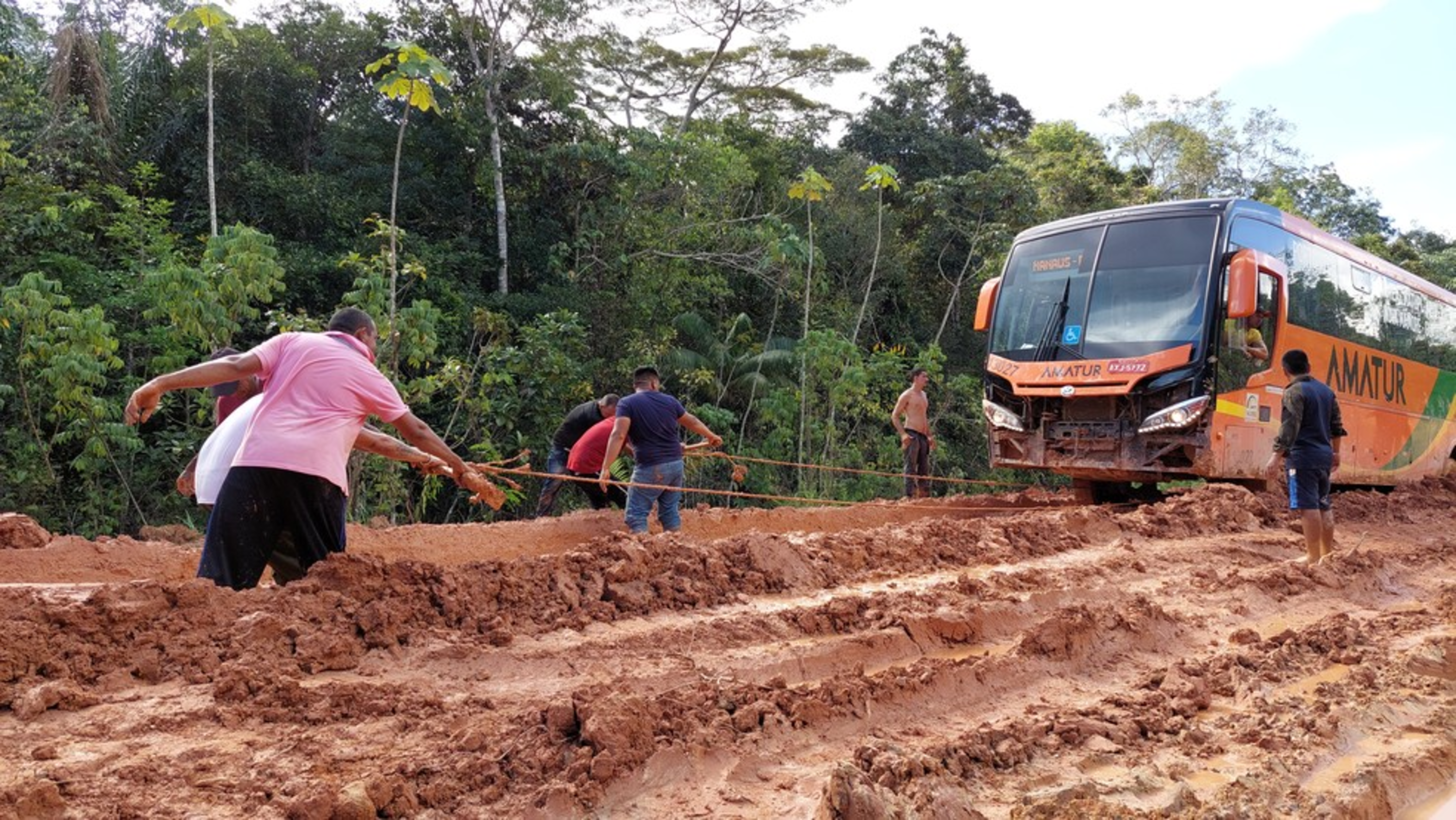
Francisco Miranda, who owns a restaurant at kilometer 297, shares the same opinion. “I think this paving project needs to move forward, because it will be good for everyone: for those who run businesses here, for truck drivers traveling along the highway, and for people leaving Manaus for other parts of the country. It is a road that connects us to the rest of Brazil. This has always been a struggle: many politicians want to carry it out, but the environment [environmental activism] keeps blocking it,” he complains.
Sineide Santos, who owns an inn at kilometer 260, also criticizes environmental activism. “NGOs [Nongovernmental Organization] come here and say the project will cause environmental impacts, but I do not think so, because this is already a fully opened highway. This project will represent progress for us in Amazonas, because food and other goods will arrive in our state at lower prices, since most cargo passes through BR-319. I am sure development will improve greatly and that progress will come,” she says.
WATERWAY TRANSPORT
Given so much controversy, what would be the alternative to paving BR-319? According to Patrícia Bittencourt, a civil engineer specializing in transportation engineering, investment in river transport is the best path forward. “We do not defend the Amazon as a sanctuary. But the road system is indeed highly harmful to the region, because it serves as a gateway to deforestation. That is why we advocate for the use of other modes of transportation in the Amazon,” she argues.
Lucas Ferrante shares the same view: “The solution is not to open an environmentally unfeasible highway, but to modernize ports, river terminals, vessels, cabotage systems, emergency logistics, and river-based health and school transport. The concrete and viable alternative is to strengthen river transport along the Madeira River. This is already the natural logistical vocation of Amazonas: a waterway-based transport network capable of moving cargo, fuel, food, medicine, oxygen, hospital equipment, and other strategic supplies at lower cost, with greater capacity and less environmental impact.”
INSTITUTIONAL PARTNERSHIP
The production of Liberal Amazon is one of the initiatives of the Technical Cooperation Agreement between the Liberal Group and the Federal University of Pará. The articles involving research from UFPA are revised by professionals from the academy. The translation of the content is also provided by the agreement, through the research project ET-Multi: Translation Studies: multifaces and multisemiotics.