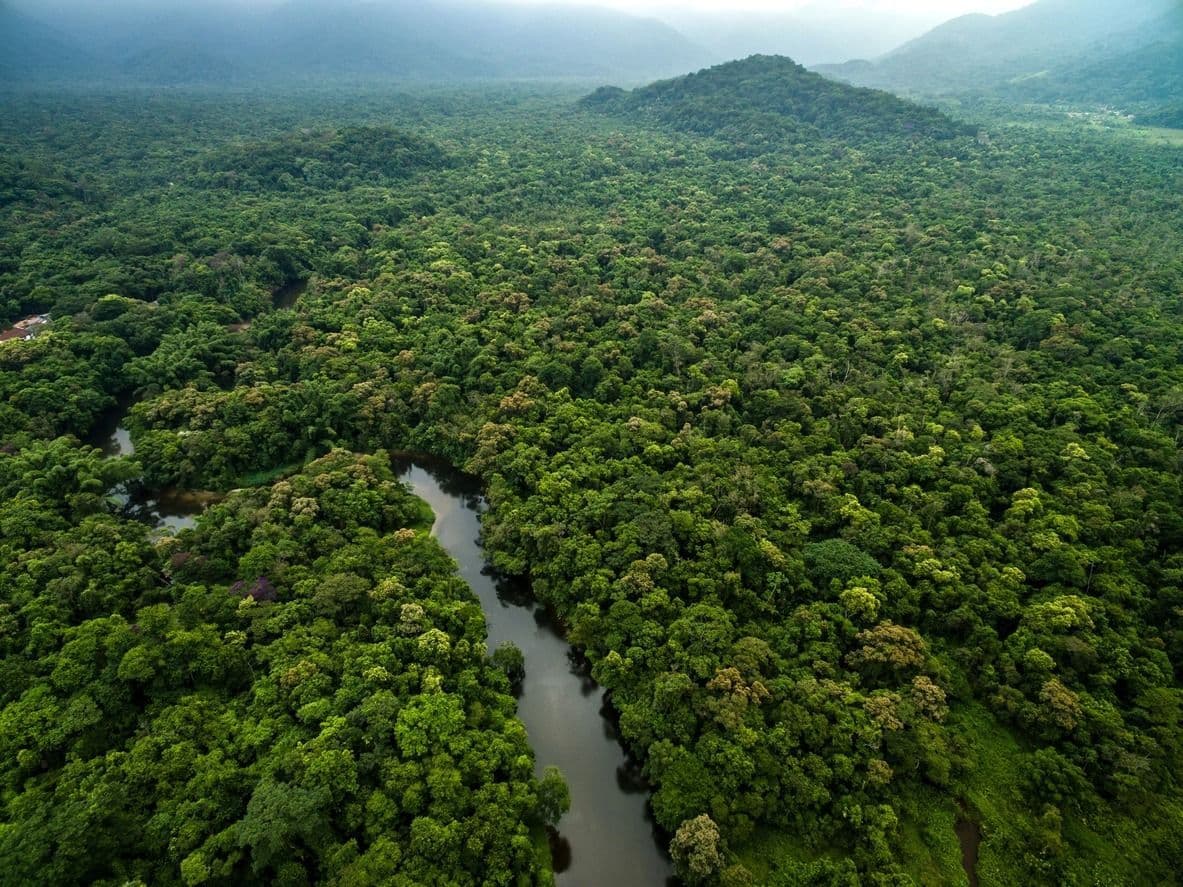
When Francisco de Orellana travelled down the Amazon River in 1542, what met his eyes was a forest virtually unknown to the Western world. Almost five centuries later, the Amazon still holds secrets that no scientific expedition has managed to fully unravel. It is estimated that there are around 16,000 species of trees in the region, and that there are at least three times as many plant species as are currently known to science. Meanwhile, 40% of the Amazonian territory has never been studied from a botanical perspective.
Botany (the scientific study of plants) in the Amazon begins with a paradox: built upon European expeditions, which catalogued immense riches – from Humboldt to von Martius, from Wallace and Bates to Richard Spruce – it treated the region as a resource, rendering the knowledge of the peoples who lived here invisible. This model needs to be overcome to address the gaps in knowledge that concern us today.
Michael Hopkins, of INPA, warned in 2007 that existing botanical collections are extremely unevenly distributed, concentrated near cities, rivers and roads. To this day, four major areas remain undersampled: the Colombian plains, the Upper Rio Negro, the border between Amazonas, Roraima and Pará, and south-eastern Pará – precisely the most threatened and least known area of the Amazon. The collection rate in these regions is just 0.1 to 0.2 specimens per square kilometre. At the current rate, it would take around 770 years to assess the entire Amazonian flora!
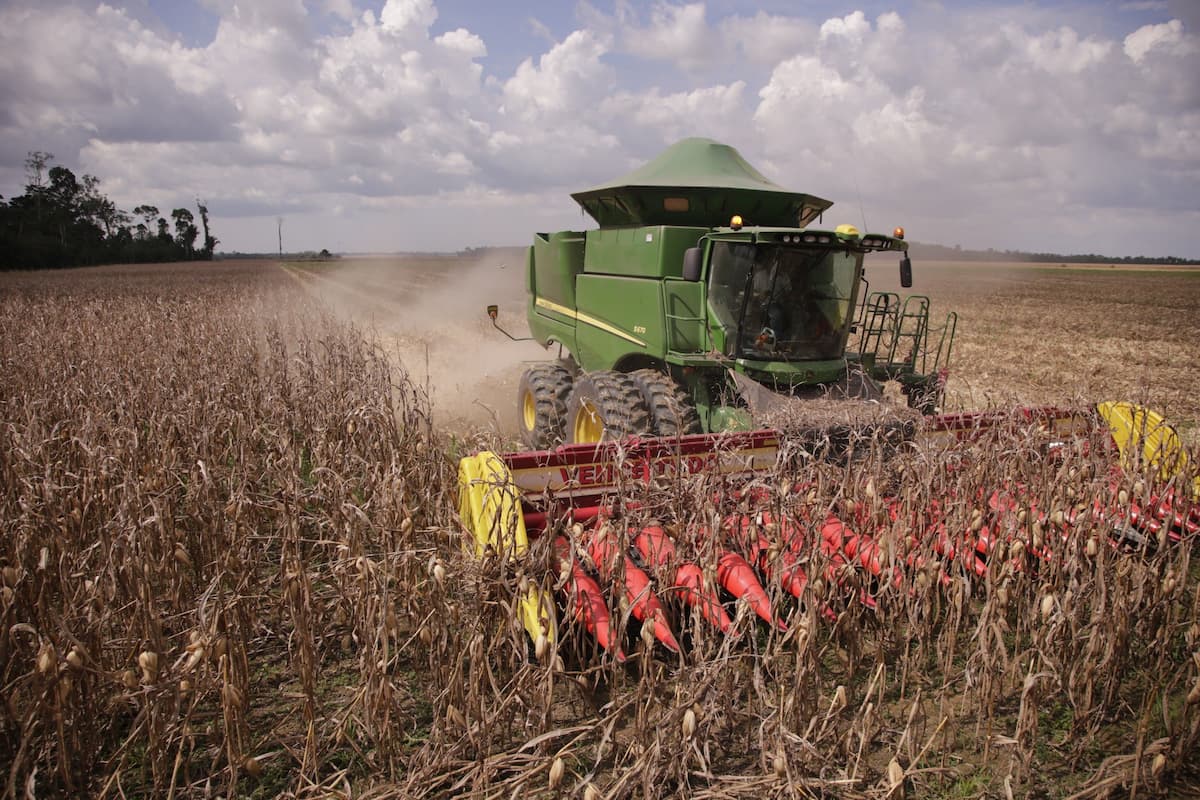
The problem is that time is running out. The Amazon has lost around 18% of its original forest, and deforestation shows no sign of stopping. In 2024, forest degradation rose by 497%, reaching 36,379 km², the highest level in 15 years. Climate change is exacerbating this situation: the average temperature in the Amazon has risen by between 0.6 and 0.8°C in recent decades, extreme droughts are becoming more frequent, and recurring fires are destroying the forest structure, replacing specialist, slow-growing species with opportunistic (pioneer) species, and reducing biomass by up to half. Recent studies indicate that, with between 20% and 25% deforestation combined with global warming, the eastern Amazon could reach a point of no return. We are dangerously close to this threshold. At the same time, botanical science has never had such powerful tools at its disposal. Genomics allows DNA to be extracted from historical herbarium specimens and reveals cryptic species that remained hidden. Environmental DNA and metabarcoding enable rapid inventories in remote regions, potentially tripling the detection rate. LiDAR maps the structure of forests in three dimensions, and artificial intelligence is already capable of identifying species from images of leaves, flowers and bark. International research networks are expanding our knowledge of Amazonian trees. Open platforms such as GBIF, SIB-BR, REFLORA and Flora do Brasil 2020 democratise access to knowledge. But no technology can replace what may be lost before it is documented. There are species that go extinct before receiving a scientific name, disappearing along with areas that were never inventoried. Every expedition to the south and south-east of Pará could be the last chance to record that stretch of forest!!
The kind of botany the Amazon needs must take landscapes and territories into account. There are many different Amazons, connected through ecological and evolutionary processes that operate on a regional scale. Indigenous territories and conservation areas are living laboratories of biodiversity. The agenda I propose combines different strategies: to describe and analyse, because what has no name cannot be protected, and every expedition to data gaps is an act of preventive conservation. To connect botany and people, because science without community is blind – the future of Amazonian botany lies in the territories, languages and knowledge that still exist. And to share, because open data, solid training and global networks are the only scale commensurate with the historical and climatic responsibility that the Amazon represents.
In 1895, when the Emílio Goeldi Museum of Pará was establishing itself as a centre for botanical research, the Amazon seemed inexhaustible. Today we know that it is not. And we also know that botany plays an irreplaceable role in defending this heritage – not merely to name and catalogue, but to inform public policy, support the demarcation of new protected areas, identify threats to species extinction, guide restoration efforts, and give a voice to the peoples who safeguard the forest. The forest cannot wait. Nor can the botanists of the Amazon.
Ima Célia Guimarães Vieira is a senior researcher at the Emílio Goeldi Museum of Pará (MPEG/MCTI), an advisor to the Presidency of FINEP, coordinator of INCT NEXUS, a full member of the Brazilian Academy of Sciences and a member of the Scientific Council of COP30.