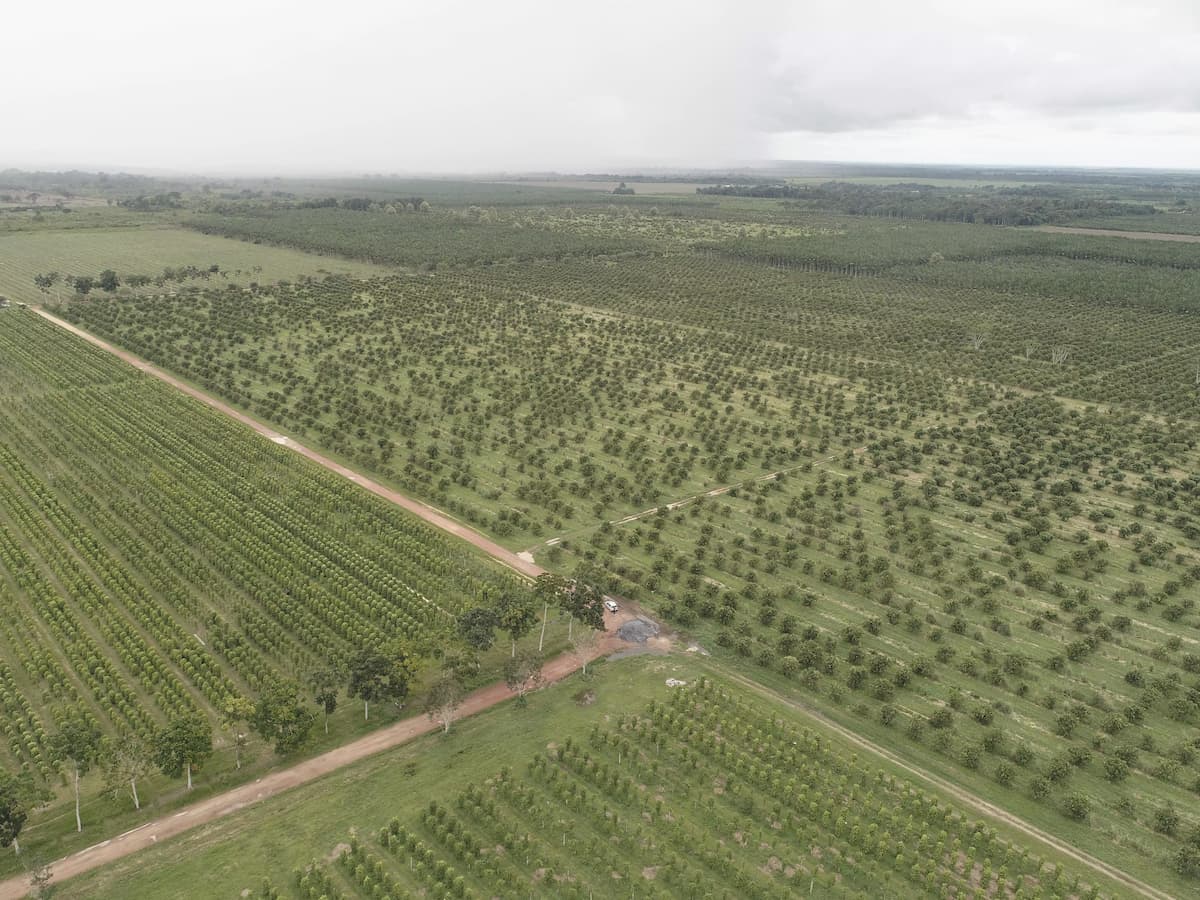
Long distances, isolated areas, difficult access, precarious communication and legal gaps that still await the presence of security forces, justice and public authorities in a more effective way. This is the scenario found by the organized crime when it settles in the corners of the Amazon. And on the routes established for illegal activities, organized crime joins environmental crimes seeking ways to act where the State cannot easily reach. Due to these peculiarities, there is a consensus among state public security authorities that the combat actions in the Amazon region is different from that experienced in other parts of Brazil. The costs are infinitely higher and so are the operational difficulties. Even on different fronts, forces are increasingly seeking integration, whether at the state or federal level, to try to put together a strategy to combat crime in the largest region of Brazil. Security bases integrating different bodies, equipment and differentiated and advanced technologies are some of the measures adopted.
The Legal Amazon is 5,015,146 square kilometers long. It is a colossal area, crossed by rivers, huge areas of forest with communities residing far from urban centers. Among the most common police issues claimed by these communities are drug trafficking and environmental crimes against fauna and flora, other occurrences refer to emergency child births, distribution of basic food baskets in times of drought, and seizures of irregular products, such as fish (in seasonal closures) and illegal hunting. There are many confrontations that distinguish the region in terms of security.
It is also a challenge for security agencies to keep crime off the target areas immediately after the withdrawal of troops. Illegal mining areas, for example, are commonly reactivated by illegal explorers after operations. A possible solution considered is the establishment of steady bases in these locations. What the authorities are seeking, therefore, is to increasingly monitor this immense territory, as even in such an extensive region, there are strategic points to target more closely.
Estreito de Breves
One of these points is Estreito de Breves, in the Marajó archipelago. Every large vessel carrying people and cargo must go through the narrow passage in order to reach Belém, the capital of Pará - especially those leaving from neighboring states, such as Amapá. The flow is intense, confirm the police officers who work at the state's first Integrated River Base, opened in June 2022, on the banks of the Tapajuru River, in the district that bears the name of the base: Intendant Antônio Lemos, who governed Belém at the end of the century XIX. The investments for assembling the structure were R$5 million. The base has its own energy generation and its own communication system, as the remote area is not covered by a telephone signal or electricity transmission. The target of the actions in the river corridor where the base was set up is mainly the transport of drugs, smuggling, piracy and environmental crimes.
The site is equipped with a basement that houses two power generators, in addition to having its own sanitary sewage treatment system, diesel oil tanks and cargo storage space. The deck has a reception area, service room, bathrooms, temporary cells and offices. In Tijupá, there are photovoltaic panels, floating devices, condensers, water tanks and gazebos.
The security base set up in Estreito de Breves gathers agents from various public security bodies, such as the Military and Civil Police, the Fire Department, the Federal Police and scientific experts. There is also a helipad, used to refuel aircraft during operations in the region.
The state of Pará government's strategy is already being replicated in other states, such as Amazonas and the Ministry of Justice recognizes it as a prototype to be adopted in Brazil.
The Secretary of Public Security of Pará, Ualame Machado, reported that since 2019 the government needed to acquire 58 new vessels to cover the rivers of the Amazon in Pará.
Óbidos will have its base by the end of the year
According to the government of Pará, the strategy is already being replicated in other Brazilian states, such as Amazonas, and the Ministry of Justice recognizes it as a prototype to be adopted in Brazil. In Pará there are also plans for other bases to be set up. The Secretary of Public Security of the government of Pará, Ualame Machado, informs that in the municipality of Óbidos another base will be soon implemented. Óbidos is where the narrow part of the Amazon River is located within Pará circumscription. The region is also an entry route for drug trafficking and organized crime in the state - which has been considered an important exporter of narcotics, since the river routes of drug traffickers and smuggled products go to the port of Vila do Conde, in Barcarena, in the Metropolitan Region of Belém.
“This base is important, primarily, because it has become a national reference. Amazonas is building one like ours. The Ministry of Justice took our project and made it a prototype river base for Brazil, because it integrates the agencies and has all the necessary equipment. It [the base] is at the only point where every vessel has to go through, so it is strategic. In the first five months of operation there, we had zero reports of boat thefts from nearby riverside communities, for example. It worked out".
Ualame assesses that the Estreito de Breves area suffers from several pressures from crime organizations, and highlighted four of them: drug trafficking; the illegal trade in stolen cell phones between the cities of Macapá (AP) and Belém (PA); the rape of vulnerable people in Marajó; and the seizure of tons of irregular fish, such as arapaima - a species of fish from shallow and fresh waters living in rivers and lakes that can weigh 100 to 200 kilos.
“So, speaking of public security river coverage in Pará, we can mention the strategy of the Antônio Lemos Base, in Breves, with a similar one being built in Óbidos, to be delivered by the end of the first half of 2024; and another undergoing the bidding process in the Abaetetuba and Barcarena regions. Furthermore, we need to acquire new vessels to serve the municipalities. Of the 144 cities in Pará, more than 100 need river transport to its provision when it comes to public security”, says the security secretary of Pará. According to Machado, the government has needed to acquire 58 new vessels to cover the rivers of Pará-Amazon, since 2019.
According to Ualame Machado, Pará needed to create two new bases to refuel aircraft, due to the large size of the state
Challenges on land and in the air
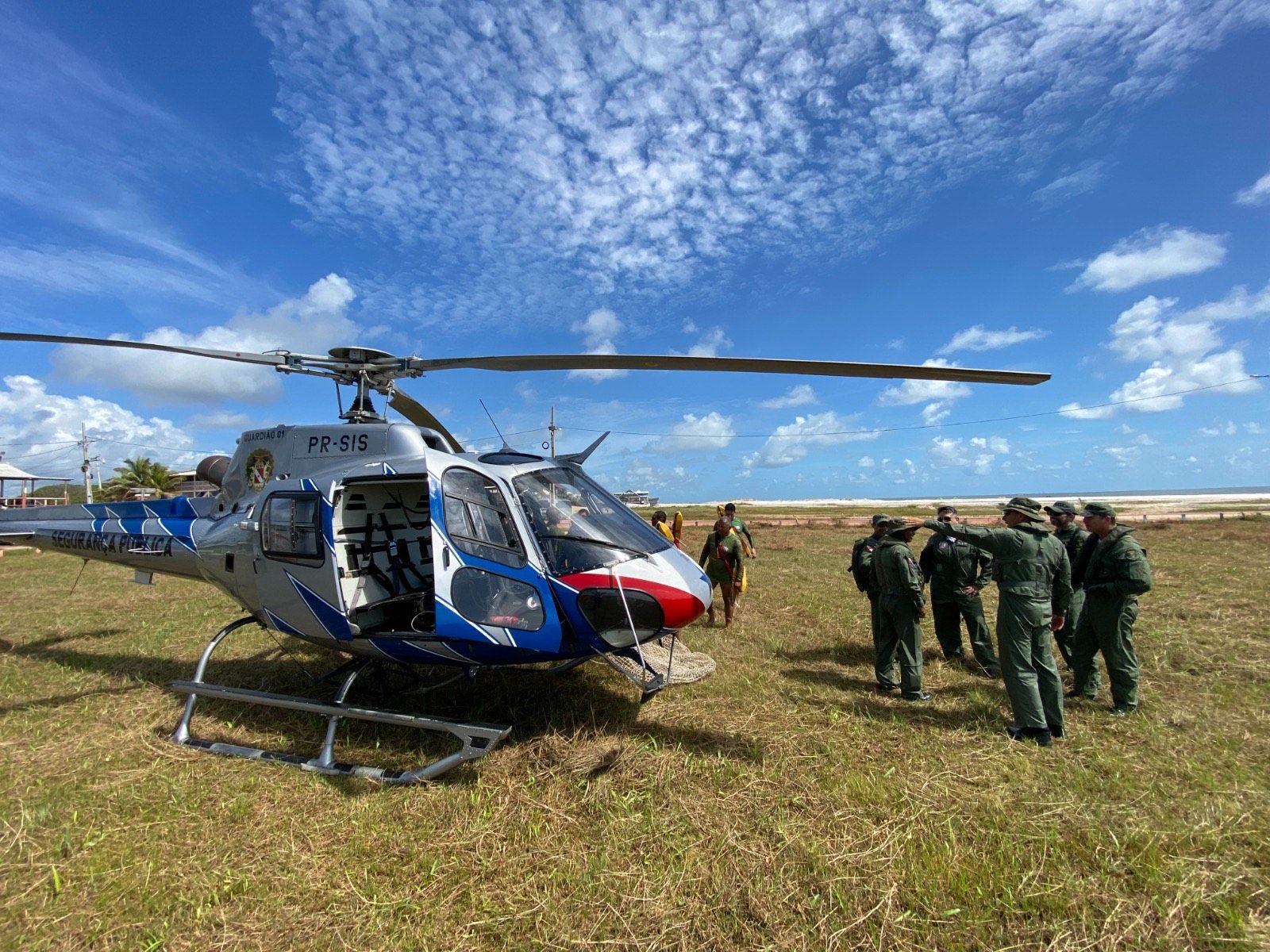
In addition to crossing rivers, for accessing the most remote areas of the Amazon, transport by aircraft is necessary, though it requires the conviction that they will have somewhere to stop to refuel. The challenge, states Ualame Machado, is to plan action strategies in which air and ground activities complement each other.
“When the current management started, the Grupamento Aéreo de Segurança Pública (Graesp) [Public Security Air Group] held around eight aircrafts and a base, in Belém. Pará is a gigantic state. There are places where it is impossible to reach without stopping to refuel. In Breves, for example, there is a tanker truck to solve this problem. Other places where the air effort can rely on land support are Santarém and Marabá, where there are now two Graesp bases”, he details.
The demands for public safety go beyond criminal incidents. “There are demands of all kinds eceived by public safety services. Recently, Civil Defense had to distribute basic food packages in areas affected by drought, such as the Marajó Archipelago. These communities were located in regions where boats couldn’t go through and there were more than a thousand food packages to be distributed. This type of action needs several trips to be carried out, so a base is necessary to refuel the aircraft.”
According to Machado, Pará needed to create two new bases for aircraft to be refueled. And since 2019, four more aircraft were provided (to support the state demands) by the justice court after they were seized from drug trafficking criminals.
On land, there are also other strategies. Land bases help in the fight against crimes (mainly environmental violations) in the Curupira operation, which began in February 2023. The bases are on the Transamazônica highway, close to the municipality of Uruará; on BR-163 road, in Novo Progresso; and in São Félix do Xingu - a municipality that is among the most affected by environmental crimes, such as illegal deforestation. “Other three land bases will be set up, in partnership with the Brazilian government. They are integrated road bases, which means we can monitor by water, air and land against all types of crime”.
The commander of the River Group of the Pará State Police in Belém, Lieutenant Luís Paulo, summarizes the strategic bottleneck in public security actions in the Amazon. “It’s precisely how agencies may manage to shorten distances, make communication work in difficult-to-access places and how to think about specific strategies for this very peculiar region.”
In the Amazon, drug trafficking expands its operations to areas of environmental crimes, explains Pedro Neto, police chief from the Federal Police in Pará
Fronts to combat crime in the region have also focused on the decapitalization of these trafficking organizations
“The gathered efforts and the information exchange are the greatest advantages of this fruitful integration. The criminals are the ones who end up losing.”, says police chief Pedro Neto
“The North of Brazil has an extensive border with several countries, making many illicit practices become transnational, and assigning to the Federal Police, the responsibility for their investigations”
Fight against “narcogarimpo” results in the seizure of half a billion reais in 2023
In Pará alone, the Federal Police seized almost R$500 millions related to criminal activities investigated in 2023. It represents the result of a peculiar association: in the Amazon, drug trafficking expands its operations to areas of environmental crimes, details police chief Pedro Neto, from Regional Judiciary Police department of the Federal Police in Pará. For this reason, the crime fighting fronts in the region have also been focusing on the decapitalization of these organizations.
Pedro Neto highlights that among the most obvious crimes committed in the region are environmental ones, “both in selective deforestation, aimed at wood smuggling, and for illegal mining, artisanal and industrial activities”. However, the Federal Police chief also highlights smuggling and drug trafficking crimes, which also use the region as a mandatory route to the external and internal market. “In recent years, a large increase in the presence of criminal factions has been observed, suggesting that criminals have found out that they could also profit from committing environmental violations, financing illegal mining for the extraction of gold and other precious metals, implementing the culture called 'narcogarimpo' [drug trafficking linked to illegal mining], in addition, bringing with it an increase in violence and related crimes.”
According to the police chief, the fight against these crimes “still requires complex logistics, including the use of aircraft, building of structures to shelter and feed the police officers and other employees involved, appropriate vehicles", among other special needs that require high financial resources. Pedro Neto reiterates: it is common among security agents to say that “no one can work alone” in the Amazon. “This statement reflects all the difficulties of operating in such an inhospitable and extensive region”, he ponders.
“The North of Brazil has an extensive border with several countries, making many illicit practices become transnational, and assigning to the Federal Police the responsibility for their investigations”. Combined with the challenges that the extensive area offers, there is the low number of supervisory bodies and the Federal Police itself in these regions, which, moreover, are difficult to supply,” he states.
He concludes that, due to the characteristics of the region, “the Amazon ends up suffering from permanent crime", which "only changes" locations. “An action in a large mine, for example, with the destruction of machines and their structure, generates a momentary loss to criminals, however, due to the profitability of the activity, they invest in another region that has not yet been inspected. It is also for this reason, that the Federal Police carries out judicial police operations, which deepen investigations, with the aim of reaching the real financiers of these criminal organizations and promote their decapitalization”.
“In these two lines of action, the Federal Police has also managed, together with other environmental agencies, to considerably reduce the levels of deforestation in the Amazon region, with a 50% reduction in 2023”, he assesses.
GOOD EXAMPLES
Neto as a chief of police explains that the PF [Federal Police] has increasingly sought to carry out interagency work, in an attempt to be more efficient and bring better results in the fight against crime. “In Pará, there are some good examples of this integration of public security bodies and environmental bodies. In November 2023, the Força Integrada de Combate ao Crime Organizado (Ficco) [Integrated Force to Combat Organized Crime] was created in Pará, with the reunion of the Civil Police, State Police, Criminal Police and Federal Police”. According to him, the mission is also backed up by the Armed Forces.
The partnership resulted in combat in difficult-to-access areas for months during 2023, such as inside the indigenous lands of Alto Rio Guamá, Apiterewa and Trincheira Bacajá - some of the most deforested in the country. “The gathered efforts and the information exchange are the greatest advantages of this fruitful integration. The criminals are the ones who end up losing.”
Another front of combat involves technologies applied to fighting crime in the Amazon, as the he explains: “the federal police has some technologies that mitigate some of the difficulties encountered in combating crime. Access to satellite images, for example, allows an investigation to be carried out in few hours, in locations where it would take a week for a team to travel through. This not only makes it possible to spot environmental crimes, such as deforestation and illegal mining, but also to identify clandestine landing sites used by drug traffickers. There are also Big Data analysis and Data Mining tools, which assist investigations by crossing data obtained from systems available to the Federal Police.
“Our policing modality is far-reaching and very important for the State, because, in the Amazon, the rivers are our streets, being the only form of transport for residents of Belém who live on islands - Combu, Cotijuba, Paquetá, Jutuba, Maracujá, among others. It is a large riverside population that needs police support and there is only one way to reach the police: through the water”.
“We’ve faced the need to transport pregnant women in the process of giving birth”, says Lieutenant Luís Paulo
“We went from ten boat inspections to 300 per month. We went from zero fugitive captures to five in the last four months; from zero wood seizure to 10 thousand cubic meters. It is a leap that our troops celebrate and that shows our progress in this very challenging work of monitoring the rivers of the Amazon”, assesses the State Police officer.
Belém’s Islands Region is Monitored
One of the main metropolises of the Amazon, Belém is made up of 42 islands, which corresponds to 65% of the city’s territory. This proportions demonstrate that even a large capital can have areas that are hard to access and that public security has to reach. The commander of the River Group of the State Police in Belém, Lieutenant Luís Paulo, reports on the troop's actions to serve these communities, which are out of the reach of public policies - from the needs of mothers who need to give birth to even coverage of reports of domestic violence. “Our policing modality is far-reaching and very important for the State, because, in the Amazon, the rivers are our streets, being the only form of transport for residents of Belém who live on islands such as Combu, Cotijuba, Paquetá, Jutuba, Maracujá, among others. It is a large riverside population that needs police support and there is only one way to reach the police: through the water”.
The commander explains that his police team is called daily for incidents of various types, far beyond criminal ones, “We have faced the need to transport pregnant women in the process of giving birth. Sometimes, domestic violence occurs. But we are also put to action because of issues such as of drug trafficking, or a drug den that has set up in some riverside community. And we also transport prisoners; we provide security for açaí transporters, who supply the entire metropolitan region through their boats, carrying tons and tons of açaí daily. And (we work) even with the fishermen, who go further, into the open sea, to fish and transport these fish to the Ver-o-Peso street market. All of this is part of the work of the State Police on the rivers.”
KNOWLEDGE
The state police officer reveals that, in addition to the weapons and the boat used to cover the rivers, the main difference of a troop like the Pará River Group is the information available about the region. According to him, these are training events that the police from Pará have already begun to export to troops in other regions. “Our difference is precisely the knowledge of how to carry out river operations, in which we are pioneers in Brazil. We have accumulated 15 years of experience and techniques for water patrolling and combating, which other police forces in Brazil seek us out to learn. For example, our police officers, even carrying their weapons, uniforms, all the equipment and wearing their vest, if they fall into the water they won't sink. We have techniques for this. We know how to make an aquatic progression to reach a drug trafficking point. These are advanced techniques that we developed for the safety of the rivers.”
The troop's performance, according to the lieutenant, is expressed in numbers. “We went from ten boat attacks per month to 300. We went from zero fugitive captures to five in the last four months; from zero wood seizures to 10 thousand cubic meters. It is a leap that our troops celebrate and that shows our progress in this very challenging work of monitoring the rivers of the Amazon”, he assesses.